Siemens Refrigerator Repair Service Dubai

Bosch Refrigerator Repair Dubai – Professional Bosch Fridge Service

Bosch refrigerators are designed for everyday food storage and may include advanced temperature controls, electronic displays, airflow systems, and other features. When a Bosch fridge develops a fault, it can affect cooling performance, food freshness, and normal kitchen routines.

Ahmed Repair Service provides Bosch refrigerator repair assistance in Dubai for common appliance problems, including cooling failures, sensor faults, fan issues, door alarms, display errors, and control panel problems.

Our refrigerator repair service can help investigate issues such as:

  • Bosch refrigerator not cooling properly
  • Bosch freezer not freezing
  • Refrigerator temperature fluctuations
  • Bosch refrigerator display errors
  • Door alarm staying on
  • Unusual fan noises
  • Water leakage or excessive frost
  • Refrigerator controls not responding
  • Cooling performance becoming inconsistent

The correct solution depends on the refrigerator model and the underlying fault. A professional inspection helps identify the affected component before repair or replacement is recommended.

If your Bosch refrigerator is not operating normally, contact Ahmed Repair Service to discuss the symptoms and arrange a suitable inspection.

Bosch Built-In and Freestanding Models

Bosch refrigerators are available in different designs, including freestanding refrigerators, built-in models, integrated units, and larger refrigerator-freezer combinations. Each design may have different installation requirements and component configurations.

Bosch Built-In Refrigerator Repair Dubai

Built-in refrigerators are fitted into kitchen cabinetry and designed to integrate with the surrounding kitchen. Accessing certain components may require additional care because the appliance is installed within a cabinet structure.

Common built-in refrigerator problems include:

  • Refrigerator not maintaining the correct temperature
  • Display or control panel faults
  • Door alignment and sealing issues
  • Fan or airflow problems
  • Unusual operating noises
  • Temperature warning alarms

A technician should assess the appliance and installation before deciding whether it needs to be moved or partially removed for access.

Bosch Freestanding Refrigerator Repair

Freestanding Bosch refrigerators are easier to access in some installations, but they can still develop cooling, electrical, drainage, or mechanical problems.

Possible faults include a refrigerator that runs continuously, a freezer that fails to freeze properly, unusual noises, or a control panel that does not respond.

When booking Bosch fridge repair in Dubai, provide the model number and explain the problem. This helps the technician understand the appliance type and prepare for the inspection.

Sensor, Fan and Control Panel Problems

Bosch refrigerators use sensors, fans, and electronic controls to help regulate temperature and distribute cold air. A problem in one component can affect the performance of the entire appliance.

Bosch Refrigerator Sensor Fault

Temperature sensors monitor conditions inside the refrigerator and freezer. If a sensor or its electrical connection develops a fault, the refrigerator may receive inaccurate temperature readings.

Potential symptoms include:

  • Temperature fluctuating unexpectedly
  • Refrigerator compartment becoming too warm
  • Food freezing in the refrigerator section
  • Cooling cycles behaving unusually
  • Temperature warnings appearing on the display

A technician can inspect the relevant sensor, wiring, and control system to determine whether the sensor needs replacement or another fault is responsible.

Bosch Fridge Fan Motor Repair

Fans help circulate air and support the refrigerator’s cooling process. Depending on the model, problems may involve an evaporator fan, condenser fan, or another fan assembly.

Common warning signs include:

  • Weak airflow inside the refrigerator
  • Unusual humming, rattling, or grinding noises
  • Uneven cooling between compartments
  • Freezer cooling while the refrigerator remains warm
  • Cooling performance deteriorating over time

Ice buildup, an obstruction, a worn motor, or an electrical fault may contribute to fan problems. Proper diagnosis is important before replacing any parts.

Bosch Refrigerator Control Panel Problems

The control panel allows users to adjust temperature settings and operate various refrigerator functions. Electronic issues may cause buttons to become unresponsive, display readings to disappear, or warning indicators to appear.

Before arranging repair, check the user manual for any control-lock settings or model-specific instructions.

If the display remains unresponsive, the appliance cannot maintain its temperature, or warning indicators repeatedly return, professional diagnosis may be required.

Door Alarm and Temperature Warning Issues

Bosch refrigerators may use audible alarms or visual indicators to warn users about door conditions or temperature changes. These warnings should not be ignored if they continue after basic checks.

Bosch Refrigerator Door Alarm

A door alarm may sound when a refrigerator or freezer door remains open for too long. It can also continue if the door does not close properly.

Possible causes include:

  • Food containers obstructing the door
  • Damaged or dirty door seals
  • Misaligned doors
  • A faulty door switch or sensor
  • An electronic control problem

Start by checking that the door closes fully and that nothing blocks the seal. Clean the seal according to the manufacturer’s instructions and inspect it for visible damage.

If the alarm continues when the door is properly closed, the door sensor, wiring, alignment, or control system may need inspection.

Bosch Refrigerator Temperature Warning

A temperature warning can appear if the refrigerator or freezer becomes warmer than expected. This may occur after a power interruption, when the door has remained open, or when the cooling system is not operating correctly.

If the appliance is not maintaining a suitable temperature, move perishable food to appropriate alternative storage and follow food-safety guidance.

A persistent temperature warning, particularly when accompanied by poor cooling, should be investigated by a qualified technician.

Bosch Refrigerator Parts and Diagnosis

Using a compatible replacement part is important for maintaining refrigerator performance and avoiding unnecessary repairs. Bosch refrigerators differ by model, size, configuration, and production generation.

Depending on the symptoms, a technician may need to inspect:

  • Temperature sensors and wiring
  • Fan motors and airflow passages
  • Door seals and door switches
  • Electronic displays and control panels
  • Defrost system components
  • Drainage systems
  • Electrical connections
  • Compressor operation and the sealed refrigeration system

A warning light or unusual symptom does not always mean the most obvious component has failed. For example, poor cooling can be related to airflow, a sensor, a fan, or another refrigeration component.

The technician should identify the underlying cause before recommending repair or replacement.

When replacement parts are required, confirm compatibility using the refrigerator’s exact model or E-Nr identification number, where available.

Professional Bosch Refrigerator Repair Process

A structured repair process helps identify the cause of the problem and determine the most appropriate next step.

Step 1: Describe the Refrigerator Problem

Explain whether the Bosch refrigerator is not cooling, showing a display error, making unusual noises, leaking water, or sounding a door alarm.

Step 2: Provide the Model Number

The model identification helps establish the refrigerator’s design and the components that may be relevant to the repair.

Step 3: Inspect the Appliance

The technician may check temperature performance, airflow, sensors, door seals, electrical connections, fans, and other components based on the reported symptoms.

Step 4: Identify the Likely Cause

Diagnostic checks help distinguish between a minor operating issue and a component failure that requires repair.

Step 5: Discuss the Repair

If a fault is identified, the repair requirements, replacement parts, estimated costs, and expected next steps should be discussed before work proceeds.

Step 6: Check Appliance Operation

After repair, the affected functions should be checked as appropriate to confirm that the original issue has been addressed.

Service availability and repair times depend on the appliance, fault, installation, and parts requirements.

When to Call a Bosch Refrigerator Technician in Dubai

Some basic problems can be addressed by checking the door closure, power supply, temperature settings, and airflow. Persistent faults may require specialist diagnosis.

Consider arranging professional Bosch refrigerator repair if:

  • Your refrigerator is no longer cooling properly.
  • The freezer cannot maintain its temperature.
  • The display repeatedly shows an error.
  • The door alarm continues when the door is closed.
  • The fan produces unusual or loud noises.
  • Temperature warnings return after basic troubleshooting.
  • The control panel stops responding.
  • Water leaks repeatedly from the appliance.

If you notice smoke, a burning smell, exposed wiring, or another electrical hazard, stop using the refrigerator and seek qualified assistance. Disconnect the power only if it is safe to do so.

Related services:

  • Refrigerator Repair Dubai
  • Refrigerator Compressor Repair Dubai
  • Refrigerator Maintenance Guide

Book Bosch Refrigerator Repair Dubai

Is your Bosch refrigerator not cooling, showing a warning, making unusual noises, or displaying a door alarm?

Ahmed Repair Service helps customers in Dubai with refrigerator repair enquiries and troubleshooting for common Bosch appliance faults.

Contact our team with your refrigerator model number and a brief description of the issue to discuss the next steps.

Call / WhatsApp: +971 54 503 3792

Website: https://ahmedrepairservice.com/

Service Area: Dubai, United Arab Emirates

Get your Bosch refrigerator problem assessed and discuss a suitable repair solution with Ahmed Repair Service.

Frequently Asked Questions

1. Do you repair Bosch built-in refrigerators?

You can contact Ahmed Repair Service to discuss your Bosch built-in refrigerator and confirm service availability for your model. Built-in units may require additional care to access components safely.

2. What causes Bosch refrigerator warning alarms?

Warning alarms may relate to an open door, a temperature change, a sensor issue, or another appliance fault. Check the door closure and consult the user manual. If the alarm continues or cooling is affected, arrange an inspection.

3. Can Bosch refrigerator sensors be replaced?

Yes. If diagnostic checks confirm that a sensor has failed, it may be replaced with a compatible component. The technician should also check the wiring and related controls to confirm the cause.

4. How long does Bosch refrigerator diagnosis take?

The time depends on the fault, refrigerator design, installation, and accessibility of the affected components. Some problems are straightforward to identify, while intermittent electrical or refrigeration-system faults may require additional testing.

5. Are Bosch refrigerator replacement parts model-specific?

Yes. Compatibility depends on the exact refrigerator model and the component required. Providing the model or E-Nr identification number helps establish which parts are suitable.

6. Why is my Bosch refrigerator running but not cooling?

Possible causes include airflow restrictions, fan problems, sensor faults, condenser issues, or a problem with the refrigeration system. Check that the doors close correctly and internal vents are not blocked. If cooling does not improve, arrange professional diagnosis.

7. Why does my Bosch refrigerator door alarm keep sounding?

The door may not be closing fully because of an obstruction, damaged seal, or alignment issue. A faulty door sensor or control problem is also possible if the alarm continues when the door is properly closed.

8. How can I book Bosch refrigerator repair in Dubai?

Call or WhatsApp Ahmed Repair Service at +971 54 503 3792 or visit https://ahmedrepairservice.com/. Share your Dubai location, Bosch refrigerator model, and a description of the fault to discuss service availability.

Bosch Refrigerator Repair Dubai – Professional Bosch Fridge Service

Bosch Refrigerator Repair Dubai – Professional Bosch Fridge Service

Bosch refrigerators are designed for everyday food storage and may include advanced temperature controls, electronic displays, airflow systems, and other features. When a Bosch fridge develops a fault, it can affect cooling performance, food freshness, and normal kitchen routines.

Ahmed Repair Service provides Bosch refrigerator repair assistance in Dubai for common appliance problems, including cooling failures, sensor faults, fan issues, door alarms, display errors, and control panel problems.

Our refrigerator repair service can help investigate issues such as:

  • Bosch refrigerator not cooling properly
  • Bosch freezer not freezing
  • Refrigerator temperature fluctuations
  • Bosch refrigerator display errors
  • Door alarm staying on
  • Unusual fan noises
  • Water leakage or excessive frost
  • Refrigerator controls not responding
  • Cooling performance becoming inconsistent

The correct solution depends on the refrigerator model and the underlying fault. A professional inspection helps identify the affected component before repair or replacement is recommended.

If your Bosch refrigerator is not operating normally, contact Ahmed Repair Service to discuss the symptoms and arrange a suitable inspection.

Bosch Built-In and Freestanding Models

Bosch refrigerators are available in different designs, including freestanding refrigerators, built-in models, integrated units, and larger refrigerator-freezer combinations. Each design may have different installation requirements and component configurations.

Bosch Built-In Refrigerator Repair Dubai

Built-in refrigerators are fitted into kitchen cabinetry and designed to integrate with the surrounding kitchen. Accessing certain components may require additional care because the appliance is installed within a cabinet structure.

Common built-in refrigerator problems include:

  • Refrigerator not maintaining the correct temperature
  • Display or control panel faults
  • Door alignment and sealing issues
  • Fan or airflow problems
  • Unusual operating noises
  • Temperature warning alarms

A technician should assess the appliance and installation before deciding whether it needs to be moved or partially removed for access.

Bosch Freestanding Refrigerator Repair

Freestanding Bosch refrigerators are easier to access in some installations, but they can still develop cooling, electrical, drainage, or mechanical problems.

Possible faults include a refrigerator that runs continuously, a freezer that fails to freeze properly, unusual noises, or a control panel that does not respond.

When booking Bosch fridge repair in Dubai, provide the model number and explain the problem. This helps the technician understand the appliance type and prepare for the inspection.

Sensor, Fan and Control Panel Problems

Bosch refrigerators use sensors, fans, and electronic controls to help regulate temperature and distribute cold air. A problem in one component can affect the performance of the entire appliance.

Bosch Refrigerator Sensor Fault

Temperature sensors monitor conditions inside the refrigerator and freezer. If a sensor or its electrical connection develops a fault, the refrigerator may receive inaccurate temperature readings.

Potential symptoms include:

  • Temperature fluctuating unexpectedly
  • Refrigerator compartment becoming too warm
  • Food freezing in the refrigerator section
  • Cooling cycles behaving unusually
  • Temperature warnings appearing on the display

A technician can inspect the relevant sensor, wiring, and control system to determine whether the sensor needs replacement or another fault is responsible.

Bosch Fridge Fan Motor Repair

Fans help circulate air and support the refrigerator’s cooling process. Depending on the model, problems may involve an evaporator fan, condenser fan, or another fan assembly.

Common warning signs include:

  • Weak airflow inside the refrigerator
  • Unusual humming, rattling, or grinding noises
  • Uneven cooling between compartments
  • Freezer cooling while the refrigerator remains warm
  • Cooling performance deteriorating over time

Ice buildup, an obstruction, a worn motor, or an electrical fault may contribute to fan problems. Proper diagnosis is important before replacing any parts.

Bosch Refrigerator Control Panel Problems

The control panel allows users to adjust temperature settings and operate various refrigerator functions. Electronic issues may cause buttons to become unresponsive, display readings to disappear, or warning indicators to appear.

Before arranging repair, check the user manual for any control-lock settings or model-specific instructions.

If the display remains unresponsive, the appliance cannot maintain its temperature, or warning indicators repeatedly return, professional diagnosis may be required.

Door Alarm and Temperature Warning Issues

Bosch refrigerators may use audible alarms or visual indicators to warn users about door conditions or temperature changes. These warnings should not be ignored if they continue after basic checks.

Bosch Refrigerator Door Alarm

A door alarm may sound when a refrigerator or freezer door remains open for too long. It can also continue if the door does not close properly.

Possible causes include:

  • Food containers obstructing the door
  • Damaged or dirty door seals
  • Misaligned doors
  • A faulty door switch or sensor
  • An electronic control problem

Start by checking that the door closes fully and that nothing blocks the seal. Clean the seal according to the manufacturer’s instructions and inspect it for visible damage.

If the alarm continues when the door is properly closed, the door sensor, wiring, alignment, or control system may need inspection.

Bosch Refrigerator Temperature Warning

A temperature warning can appear if the refrigerator or freezer becomes warmer than expected. This may occur after a power interruption, when the door has remained open, or when the cooling system is not operating correctly.

If the appliance is not maintaining a suitable temperature, move perishable food to appropriate alternative storage and follow food-safety guidance.

A persistent temperature warning, particularly when accompanied by poor cooling, should be investigated by a qualified technician.

Bosch Refrigerator Parts and Diagnosis

Using a compatible replacement part is important for maintaining refrigerator performance and avoiding unnecessary repairs. Bosch refrigerators differ by model, size, configuration, and production generation.

Depending on the symptoms, a technician may need to inspect:

  • Temperature sensors and wiring
  • Fan motors and airflow passages
  • Door seals and door switches
  • Electronic displays and control panels
  • Defrost system components
  • Drainage systems
  • Electrical connections
  • Compressor operation and the sealed refrigeration system

A warning light or unusual symptom does not always mean the most obvious component has failed. For example, poor cooling can be related to airflow, a sensor, a fan, or another refrigeration component.

The technician should identify the underlying cause before recommending repair or replacement.

When replacement parts are required, confirm compatibility using the refrigerator’s exact model or E-Nr identification number, where available.

Professional Bosch Refrigerator Repair Process

A structured repair process helps identify the cause of the problem and determine the most appropriate next step.

Step 1: Describe the Refrigerator Problem

Explain whether the Bosch refrigerator is not cooling, showing a display error, making unusual noises, leaking water, or sounding a door alarm.

Step 2: Provide the Model Number

The model identification helps establish the refrigerator’s design and the components that may be relevant to the repair.

Step 3: Inspect the Appliance

The technician may check temperature performance, airflow, sensors, door seals, electrical connections, fans, and other components based on the reported symptoms.

Step 4: Identify the Likely Cause

Diagnostic checks help distinguish between a minor operating issue and a component failure that requires repair.

Step 5: Discuss the Repair

If a fault is identified, the repair requirements, replacement parts, estimated costs, and expected next steps should be discussed before work proceeds.

Step 6: Check Appliance Operation

After repair, the affected functions should be checked as appropriate to confirm that the original issue has been addressed.

Service availability and repair times depend on the appliance, fault, installation, and parts requirements.

When to Call a Bosch Refrigerator Technician in Dubai

Some basic problems can be addressed by checking the door closure, power supply, temperature settings, and airflow. Persistent faults may require specialist diagnosis.

Consider arranging professional Bosch refrigerator repair if:

  • Your refrigerator is no longer cooling properly.
  • The freezer cannot maintain its temperature.
  • The display repeatedly shows an error.
  • The door alarm continues when the door is closed.
  • The fan produces unusual or loud noises.
  • Temperature warnings return after basic troubleshooting.
  • The control panel stops responding.
  • Water leaks repeatedly from the appliance.

If you notice smoke, a burning smell, exposed wiring, or another electrical hazard, stop using the refrigerator and seek qualified assistance. Disconnect the power only if it is safe to do so.

Related services:

  • Refrigerator Repair Dubai
  • Refrigerator Compressor Repair Dubai
  • Refrigerator Maintenance Guide

Book Bosch Refrigerator Repair Dubai

Is your Bosch refrigerator not cooling, showing a warning, making unusual noises, or displaying a door alarm?

Ahmed Repair Service helps customers in Dubai with refrigerator repair enquiries and troubleshooting for common Bosch appliance faults.

Contact our team with your refrigerator model number and a brief description of the issue to discuss the next steps.

Call / WhatsApp: +971 54 503 3792

Website: https://ahmedrepairservice.com/

Service Area: Dubai, United Arab Emirates

Get your Bosch refrigerator problem assessed and discuss a suitable repair solution with Ahmed Repair Service.

Frequently Asked Questions

1. Do you repair Bosch built-in refrigerators?

You can contact Ahmed Repair Service to discuss your Bosch built-in refrigerator and confirm service availability for your model. Built-in units may require additional care to access components safely.

2. What causes Bosch refrigerator warning alarms?

Warning alarms may relate to an open door, a temperature change, a sensor issue, or another appliance fault. Check the door closure and consult the user manual. If the alarm continues or cooling is affected, arrange an inspection.

3. Can Bosch refrigerator sensors be replaced?

Yes. If diagnostic checks confirm that a sensor has failed, it may be replaced with a compatible component. The technician should also check the wiring and related controls to confirm the cause.

4. How long does Bosch refrigerator diagnosis take?

The time depends on the fault, refrigerator design, installation, and accessibility of the affected components. Some problems are straightforward to identify, while intermittent electrical or refrigeration-system faults may require additional testing.

5. Are Bosch refrigerator replacement parts model-specific?

Yes. Compatibility depends on the exact refrigerator model and the component required. Providing the model or E-Nr identification number helps establish which parts are suitable.

6. Why is my Bosch refrigerator running but not cooling?

Possible causes include airflow restrictions, fan problems, sensor faults, condenser issues, or a problem with the refrigeration system. Check that the doors close correctly and internal vents are not blocked. If cooling does not improve, arrange professional diagnosis.

7. Why does my Bosch refrigerator door alarm keep sounding?

The door may not be closing fully because of an obstruction, damaged seal, or alignment issue. A faulty door sensor or control problem is also possible if the alarm continues when the door is properly closed.

8. How can I book Bosch refrigerator repair in Dubai?

Call or WhatsApp Ahmed Repair Service at +971 54 503 3792 or visit https://ahmedrepairservice.com/. Share your Dubai location, Bosch refrigerator model, and a description of the fault to discuss service availability.

Samsung Refrigerator Error Code Repair Dubai – Fault Diagnosis

Samsung Refrigerator Error Code Repair Dubai – Fault Diagnosis

Samsung refrigerators use digital displays, sensors, fans, and electronic controls to monitor appliance performance. When the refrigerator detects a potential problem, it may display an error code, flash an indicator, or show an abnormal temperature reading.

These warnings can help identify which system needs attention. However, an error code does not always mean a particular component has failed. The underlying cause may involve wiring, a sensor, restricted airflow, a fan, a defrost component, or an electronic control issue.

Ahmed Repair Service provides Samsung refrigerator repair assistance in Dubai for common cooling faults, sensor problems, flashing displays, fan-related issues, and electronic control faults.

Our diagnostic service can help investigate problems such as:

  • Samsung refrigerator error codes
  • Flashing temperature displays
  • Refrigerator sensor warnings
  • Fan-related error indicators
  • Refrigerator not cooling properly
  • Freezer temperature problems
  • Defrost system faults
  • Electronic control board issues

If your Samsung refrigerator displays a warning or stops cooling correctly, note the exact code and contact our team to discuss the next steps.

Common Samsung Refrigerator Warning Indicators

Samsung refrigerator error codes and warning indicators vary by model and product generation. The same-looking symptom can sometimes have different causes, so identifying the exact model is important.

Samsung Refrigerator Flashing Display

A flashing display may indicate a temperature warning, a control setting, a power interruption, or a fault affecting the refrigerator’s operation.

If the display flashes after a power outage or after the appliance has been moved, the refrigerator may need time to return to its normal temperature. Some models also display temperature alarms when the internal temperature becomes too warm.

You can start with these basic checks:

  1. Confirm that the refrigerator has a stable power supply.
  2. Check that the refrigerator and freezer doors close completely.
  3. Make sure food packages are not blocking internal air vents.
  4. Check the display for a specific error code or warning symbol.
  5. Consult the user manual for your exact Samsung model.

If the warning continues, the refrigerator fails to cool, or the display becomes unresponsive, professional diagnosis may be necessary.

Samsung Refrigerator Error Codes

Different Samsung refrigerator models use different error codes and diagnostic indicators. Some codes relate to sensors, fans, defrost systems, ice-making components, or communication between electronic controls.

When an error appears, record the exact characters shown on the display. If possible, take a photograph before attempting any troubleshooting.

Avoid assuming that a code always identifies a failed part. A sensor-related warning, for example, may require checking the sensor, wiring, connectors, and control system before determining the cause.

Sensor and Temperature-Related Faults

Temperature sensors help the refrigerator monitor conditions in different compartments and regulate cooling. If a sensor provides an incorrect reading or its circuit develops a problem, the refrigerator may not maintain the expected temperature.

Samsung Refrigerator Sensor Error

A sensor-related fault may cause temperature readings to behave unexpectedly or may trigger an error indicator.

Possible symptoms include:

  • Refrigerator compartment becoming too warm
  • Freezer temperature fluctuating
  • Food freezing in the refrigerator compartment
  • Cooling cycles running unusually long
  • A sensor-related error code appearing
  • Temperature readings that do not match actual conditions

A technician can inspect the relevant sensor, connectors, wiring, and control inputs to determine whether a sensor replacement or another repair is required.

Samsung Refrigerator Temperature Error

A temperature warning may occur when the refrigerator or freezer becomes warmer than expected. This can happen after a power interruption, if the doors remain open, when airflow is restricted, or when a cooling component is not working correctly.

If the refrigerator is not maintaining a safe temperature, protect perishable food by transferring it to suitable alternative storage. Follow food-safety guidance rather than relying on the display alone.

A professional inspection may be required if the temperature remains abnormal or the warning returns repeatedly.

Fan and Defrost-Related Errors

Fans circulate air through the refrigerator and help distribute cold air. Defrost components prevent excessive ice accumulation in areas where it can interfere with cooling and airflow.

Problems involving these systems may cause unusual noises, uneven temperatures, or reduced cooling performance.

Samsung Fridge Fan Error

Depending on the model, a Samsung refrigerator may have evaporator, condenser, or other cooling-related fans.

A fan-related fault may involve a blocked fan, ice buildup, a worn motor, a wiring issue, or a problem with the control system.

Common warning signs include:

  • Refrigerator not cooling evenly
  • Freezer working while the refrigerator compartment remains warm
  • Unusual humming, rattling, or fan noise
  • Weak airflow from internal vents
  • A recurring fan-related error indicator

A technician should check whether the fan is obstructed, whether ice is interfering with movement, and whether the motor and electrical connections are functioning correctly.

Samsung Refrigerator Defrost Error

A defrost-related problem can allow ice to accumulate around the evaporator or airflow passages. Excessive ice may prevent proper air circulation and reduce cooling performance.

Possible causes include a failed defrost heater, a sensor fault, a wiring problem, or a control issue, depending on the model.

If frost keeps returning or cooling performance declines, arrange an inspection. Avoid chipping away ice with sharp tools or using excessive heat to speed up defrosting, as this can damage the appliance.

Electronic Control Board Diagnosis

The electronic control board manages various refrigerator functions, including cooling cycles, fan operation, temperature monitoring, and communication with other components.

An electronic control problem can produce unusual symptoms, but similar symptoms may also arise from a faulty sensor, damaged wiring, or an unstable power supply.

Samsung Refrigerator Control Board Fault

Possible signs of a control-related problem include:

  • Display panel not responding
  • Repeated or unexplained error indicators
  • Cooling cycles behaving abnormally
  • Fans not operating as expected
  • Refrigerator functions stopping intermittently
  • Multiple warnings appearing without an obvious cause

Correct diagnosis involves checking the affected circuit and associated components before deciding whether the control board needs repair or replacement.

Replacing a board without verifying the cause may not solve the original problem. The correct part must also match the refrigerator’s model and configuration.

When Professional Repair Is Required

Basic checks can help identify simple issues, but some Samsung refrigerator faults require specialist diagnosis.

Contact a refrigerator technician if:

  • An error code continues to appear.
  • The refrigerator or freezer is not cooling.
  • A fan is making unusual noises or has stopped operating.
  • The display repeatedly flashes or becomes unresponsive.
  • The refrigerator develops recurring frost buildup.
  • Temperature warnings return after basic troubleshooting.
  • The appliance switches off unexpectedly.

If you notice smoke, a burning smell, damaged wiring, or another electrical hazard, stop using the refrigerator and seek qualified assistance. Disconnect the power only if it is safe to do so.

When booking a repair, provide the technician with the refrigerator’s model number, the exact error code, the symptoms, and when the problem started. This information can help narrow down the likely fault.

Samsung Refrigerator Error Code Repair Dubai – Book a Technician

Is your Samsung refrigerator displaying an error code, flashing its temperature display, or failing to maintain the correct cooling temperature?

Ahmed Repair Service helps customers in Dubai with Samsung refrigerator troubleshooting and repair enquiries involving common sensor, fan, defrost, and electronic control problems.

Contact us to discuss your refrigerator fault and arrange a suitable inspection.

Call / WhatsApp: +971 54 503 3792

Website: https://ahmedrepairservice.com/

Service Area: Dubai, United Arab Emirates

Don’t ignore a recurring refrigerator warning. Get the fault assessed to help protect your food and restore normal appliance operation.

Frequently Asked Questions

1. What should I do if my Samsung refrigerator displays an error code?

Record the exact code, check your refrigerator’s user manual, and note whether the refrigerator and freezer are cooling normally. If the error persists or the appliance is not working correctly, contact a qualified technician for diagnosis.

2. Why is my Samsung refrigerator display flashing?

A flashing display may indicate a temperature alarm, a control setting, a power interruption, or a system fault. Check the doors, power supply, and user manual. If the display continues flashing or cooling is affected, arrange an inspection.

3. Can a Samsung refrigerator sensor error be repaired?

Yes. If testing confirms a faulty temperature sensor or its circuit, the affected component may be repairable or replaceable. The technician should verify the sensor, wiring, and related controls before recommending a solution.

4. Why does my Samsung refrigerator show a fan error?

A fan-related warning may result from an obstructed fan, ice buildup, a faulty motor, wiring issues, or a control problem. The exact cause depends on the model and error indicator.

5. Can a defrost fault cause a Samsung refrigerator to stop cooling?

Yes. Excessive ice buildup can restrict airflow and affect cooling performance. A technician may need to inspect the defrost heater, sensors, wiring, and associated control system.

6. Does every Samsung refrigerator error code mean a part has failed?

No. Some warnings may follow a power interruption or reflect a temporary operating condition. Error codes should be interpreted using the correct model-specific documentation and appropriate diagnostic checks.

7. Can a Samsung refrigerator control board be repaired?

In some cases, the control board may be repairable; in others, replacement may be more appropriate. The decision depends on the fault, board condition, model, and availability of suitable parts.

8. How can I book Samsung refrigerator error code repair in Dubai?

Call or WhatsApp Ahmed Repair Service at +971 54 503 3792 or visit https://ahmedrepairservice.com/. Share your refrigerator model, displayed error code, and location in Dubai to discuss the next steps.

LG Refrigerator Repair Dubai – Expert LG Fridge Technician

LG Refrigerator Repair Dubai – Expert LG Fridge Technician

An LG refrigerator is an important household appliance that helps keep food fresh and beverages properly chilled. When your fridge stops cooling, displays an error code, leaks water, or develops an unusual noise, professional diagnosis can help identify the problem and determine the right repair.

Ahmed Repair Service provides LG refrigerator repair services in Dubai for common refrigerator faults, including cooling problems, temperature fluctuations, fan issues, ice maker faults, display problems, and electronic control failures.

Whether you have a standard LG refrigerator, a double-door model, or an LG side-by-side refrigerator, the correct repair depends on the model and the symptoms.

Our refrigerator repair service can help you investigate problems such as:

  • LG refrigerator not cooling properly
  • LG freezer not freezing
  • Refrigerator temperature fluctuating
  • Excessive frost buildup
  • Water leaking from the refrigerator
  • Ice maker not producing ice
  • Refrigerator making unusual noises
  • Display panel flashing or showing an error
  • Refrigerator switching off unexpectedly

If your LG fridge is not working as expected, contact our team to discuss the problem and arrange an inspection.

Common LG Refrigerator Faults

LG refrigerators contain cooling components, sensors, fans, electronic controls, and other parts that work together to maintain the required temperature. A fault in one component can affect overall performance.

LG Refrigerator Not Cooling

If your LG refrigerator is running but not cooling properly, possible causes include restricted airflow, dirty condenser areas where accessible, fan problems, sensor faults, or issues within the sealed refrigeration system.

The refrigerator may also struggle to maintain temperature if its door seal is damaged or the doors are not closing correctly.

A technician can inspect the appliance and identify the underlying cause before recommending a repair.

LG Refrigerator Not Freezing

When the freezer compartment is not freezing food properly, the issue may involve airflow, temperature controls, a fan, a defrost component, or the refrigeration system.

Avoid repeatedly opening the freezer door, and transfer temperature-sensitive food to suitable alternative storage if the temperature cannot be maintained.

LG Refrigerator Leaking Water

Water collecting inside or underneath an LG refrigerator can result from a blocked defrost drain, drainage problems, a water connection issue, or an ice maker-related fault.

The source of the leak should be identified before replacing components. If water is near electrical connections, stop using the appliance and disconnect power only if it is safe to do so.

LG Refrigerator Making Unusual Noises

Buzzing, rattling, grinding, or persistent clicking may indicate a fan obstruction, vibration, compressor-related issue, or another mechanical fault.

Some operating sounds are normal, but a new or unusually loud noise should be investigated if it continues or accompanies poor cooling.

LG Temperature Sensor and Fan Problems

Temperature sensors and fans help an LG refrigerator regulate temperature and circulate cold air between the appropriate compartments.

When these components malfunction, the refrigerator may cool unevenly, run for unusually long periods, or struggle to maintain the selected temperature.

LG Refrigerator Temperature Sensor Fault

A temperature sensor measures conditions inside the refrigerator and sends information to the control system. If the sensor or its wiring develops a fault, the appliance may receive incorrect temperature readings.

Possible symptoms include:

  • Refrigerator temperature changing unexpectedly
  • Food freezing inside the refrigerator compartment
  • Refrigerator not reaching the selected temperature
  • Cooling cycles that seem unusually long or short
  • An error code related to a sensor

A technician can check the sensor, wiring, and associated controls to determine whether a component needs repair or replacement.

LG Fridge Fan Motor Repair

Refrigerator fans circulate air and help distribute cooling throughout the appliance. Depending on the model, problems may involve the evaporator fan, condenser fan, or another fan assembly.

Common warning signs include:

  • Weak airflow inside the refrigerator
  • Freezer cooling but refrigerator compartment remaining warm
  • Unusual fan noise
  • Uneven temperatures between compartments
  • Cooling performance deteriorating over time

Ice buildup or an obstruction may sometimes interfere with fan operation. The technician should identify the cause rather than replacing the fan without proper diagnosis.

LG Display and Electronic Control Faults

Modern LG refrigerators may include digital displays, electronic controls, temperature indicators, and diagnostic error codes. These features help operate the appliance and can provide useful information when a fault occurs.

LG Refrigerator Display Problem

A flashing display, unresponsive buttons, missing temperature readings, or a blank control panel may indicate a power supply issue, a control lock setting, a communication problem, or an electronic component fault.

Before arranging a repair, you can check whether the appliance has power and whether a control-lock feature is enabled. Follow the instructions in the user manual for your specific model.

If the display remains unresponsive or the refrigerator is no longer cooling correctly, professional inspection may be necessary.

LG Refrigerator Error Codes

LG refrigerator error codes vary by model and indicate different types of faults. The code can help narrow down the issue, but it does not always identify a failed component with certainty.

If an error appears:

  1. Record the exact code shown on the display.
  2. Check the user manual for your model.
  3. Note whether the refrigerator or freezer is still cooling.
  4. Avoid repeatedly resetting the appliance without understanding the fault.
  5. Share the model number and error code with the technician.

An accurate diagnosis helps prevent unnecessary replacement of parts that may still be working correctly.

LG Refrigerator Control Board Repair

The electronic control board manages different refrigerator functions, depending on the model. A control-related problem may cause inconsistent operation, display faults, or interruptions in cooling.

However, similar symptoms can also result from faulty sensors, damaged wiring, power issues, or other components. A technician should test the relevant circuits and components before deciding whether the board requires repair or replacement.

LG Side-by-Side Refrigerator Repair

LG side-by-side refrigerators offer separate refrigerator and freezer compartments and may include features such as an ice maker, water dispenser, digital temperature controls, and additional cooling functions.

Because these appliances contain multiple systems, troubleshooting should consider the specific model and features installed.

Common LG side-by-side refrigerator problems include:

  • Refrigerator compartment not cooling
  • Freezer compartment not freezing
  • Ice maker not producing ice
  • Water dispenser not working
  • Water leakage
  • Digital display faults
  • Fan noise or airflow problems
  • Temperature fluctuations
  • Frost buildup or drainage issues

If your side-by-side refrigerator has stopped producing ice, check the water supply and confirm that the ice maker has not been switched off, if these checks are safe and applicable to your model.

For persistent cooling, electrical, or mechanical faults, arrange a professional inspection.

Genuine Parts and Professional Diagnosis

Choosing the correct replacement component is important for maintaining refrigerator performance and compatibility. LG refrigerators come in different models, configurations, and production generations, so a component suitable for one appliance may not fit another.

During diagnosis, the technician may need to inspect:

  • Temperature sensors and wiring
  • Evaporator and condenser fans
  • Defrost components
  • Door seals and hinges
  • Water supply and drainage systems
  • Ice maker components
  • Display panels and electronic controls
  • Compressor operation and the sealed refrigeration system

Parts should be selected according to the refrigerator’s exact model and fault. Genuine LG parts or suitable compatible replacements should be confirmed before installation rather than assumed.

If your refrigerator requires a major repair, ask about the condition of the appliance, the expected repair cost, and whether the proposed solution is appropriate for its age and overall condition.

When to Call an LG Refrigerator Technician

Some refrigerator problems can be checked through basic user-level troubleshooting. Persistent cooling failures, electrical faults, and mechanical problems require more careful assessment.

Consider arranging a technician if:

  • Your LG refrigerator is no longer keeping food cold.
  • The freezer cannot maintain a suitable temperature.
  • An error code keeps returning.
  • The fan makes unusual noises or stops working.
  • The display is flashing or unresponsive.
  • Water continues to leak after basic checks.
  • The ice maker repeatedly fails.
  • The appliance switches off unexpectedly.

Do not remove electrical panels or attempt repairs to the compressor or sealed refrigeration system yourself. If you notice smoke, a burning smell, or signs of electrical danger, stop using the appliance and seek qualified assistance.

Related services:

  • Refrigerator Repair Dubai
  • Refrigerator Compressor Repair Dubai
  • Refrigerator Maintenance Guide

Book LG Refrigerator Repair Dubai

Is your LG refrigerator not cooling, displaying an error code, leaking water, or making unusual noises?

Ahmed Repair Service helps customers in Dubai with LG refrigerator repair enquiries and troubleshooting for common appliance faults.

Contact us with your refrigerator model number and a description of the problem so we can discuss the repair requirements.

Call / WhatsApp: +971 54 503 3792

Website: https://ahmedrepairservice.com/

Service Area: Dubai, United Arab Emirates

Don’t let a faulty refrigerator put your food at risk. Contact Ahmed Repair Service to discuss your LG refrigerator repair needs in Dubai.

Frequently Asked Questions

1. Which LG refrigerator faults require a technician?

Persistent cooling problems, repeated error codes, fan failures, electronic control faults, compressor-related issues, and ongoing water leakage may require professional diagnosis. Stop using the appliance if you notice electrical danger or a burning smell.

2. What do LG refrigerator error codes mean?

LG refrigerator error codes identify possible faults involving different systems, depending on the model. Check the user manual for the exact model and share the displayed code with a technician. The code alone may not confirm which component has failed.

3. Why does an LG refrigerator display flash?

A flashing display can result from a control setting, power interruption, sensor problem, communication fault, or electronic control issue. Check the user manual and control-lock settings first. If the display continues flashing or cooling is affected, arrange an inspection.

4. Can LG refrigerator fans be replaced?

Yes, a faulty refrigerator fan can often be replaced when testing confirms that the fan assembly has failed. The correct part depends on the LG refrigerator model, and an obstruction or ice buildup should also be investigated.

5. Do you repair LG side-by-side refrigerators?

Contact Ahmed Repair Service to discuss your LG side-by-side refrigerator problem and confirm service availability for your model. Common issues include cooling failures, ice maker faults, water leakage, fan problems, and display errors.

6. Why is my LG refrigerator running but not cooling?

Possible causes include airflow restrictions, fan problems, sensor faults, condenser issues, or a sealed-system problem. Check that the doors close properly and avoid blocking internal air vents. A technician can identify the underlying cause if cooling does not improve.

7. Why is my LG refrigerator making a loud noise?

A loud or unusual noise may come from a fan, vibration, ice contacting a moving component, or a mechanical fault. If the noise is persistent or accompanied by poor cooling, arrange a professional inspection.

8. How can I book LG refrigerator repair in Dubai?

Call or WhatsApp Ahmed Repair Service at +971 54 503 3792, or visit https://ahmedrepairservice.com/. Share your location in Dubai, the refrigerator model if available, and a brief description of the problem.

Commercial Appliance Repair Dubai – Restaurant & Business Equipment Service

Commercial Appliance Repair Dubai – Restaurant & Business Equipment Service

Commercial appliances play an important role in restaurants, cafés, hotels, catering businesses, supermarkets, and other commercial facilities. When essential equipment stops working, it can interrupt daily operations, affect food storage, and delay customer service.

Ahmed Repair Service provides commercial appliance repair services in Dubai for businesses experiencing problems with refrigeration equipment, kitchen appliances, ice machines, and other commercial equipment. Our goal is to help businesses identify appliance faults and arrange suitable repairs to reduce unnecessary downtime.

Whether your commercial freezer is not maintaining the correct temperature, your dishwasher is not cleaning properly, or your kitchen equipment has stopped working, professional troubleshooting can help identify the cause.

Contact our team to discuss your commercial appliance repair requirements in Dubai.

Commercial Appliance Repair Services in Dubai

Commercial appliances are often used more frequently than household appliances. Continuous operation, heavy workloads, poor maintenance, and worn components can lead to performance problems.

Our commercial appliance repair service covers common faults involving different types of business equipment, depending on the appliance and the repair requirements.

Common commercial appliance problems include:

  • Equipment failing to switch on
  • Unusual noises or vibrations
  • Temperature control problems
  • Water leakage or drainage issues
  • Heating or cooling failures
  • Electrical and control panel faults
  • Error codes and interrupted operating cycles
  • Reduced appliance performance
  • Ice production problems
  • Repeated shutdowns during operation

A proper inspection helps determine whether the issue involves an electrical component, motor, thermostat, heating element, drainage system, control board, or another part.

Restaurant Appliance Repair Dubai

Restaurants depend on reliable kitchen equipment to prepare food, maintain safe storage conditions, and serve customers efficiently. A malfunctioning appliance can affect kitchen productivity, particularly during busy service hours.

Ahmed Repair Service helps restaurants in Dubai address common problems with commercial kitchen and refrigeration equipment.

Restaurant appliance repair may include:

  • Commercial freezer repair
  • Commercial refrigerator repair
  • Commercial oven repair
  • Commercial dishwasher repair
  • Commercial ice machine repair
  • Commercial refrigeration troubleshooting
  • Kitchen equipment fault diagnosis

If an appliance stops working during business hours, stop using it if it presents an electrical, overheating, or other safety risk. For refrigeration failures, move temperature-sensitive food to suitable storage and follow applicable food-safety procedures.

Need restaurant appliance repair in Dubai? Contact Ahmed Repair Service to discuss the equipment problem and arrange an inspection.

Café Equipment Repair Dubai

Cafés rely on coffee machines, refrigeration units, ice makers, dishwashers, and other equipment to keep daily operations running smoothly. Equipment problems can slow down drink preparation, affect food storage, and create delays for customers.

Commercial café equipment can develop problems such as inconsistent temperatures, leaking water, poor heating, blocked drainage, and electrical faults.

Our related repair services include:

  • Commercial coffee machine repair
  • Commercial ice machine repair
  • Refrigerator and freezer repair
  • Commercial dishwasher repair
  • Cooling equipment troubleshooting

For coffee machine problems, the cause may involve water supply, scale buildup, heating components, pumps, or internal controls. The correct repair depends on the machine type and the fault identified during inspection.

Related service: Coffee Machine Repair Dubai.

Commercial Refrigeration Repair Dubai

Commercial refrigeration is essential for restaurants, supermarkets, cafés, catering companies, and food storage facilities. Refrigeration problems require prompt attention because unstable temperatures can affect stored products and business operations.

Common commercial refrigeration issues include:

  • Commercial refrigerator not cooling
  • Commercial freezer not freezing
  • Temperature fluctuations
  • Excessive frost buildup
  • Water leaking around the equipment
  • Unusual compressor or fan noises
  • Damaged door seals
  • Faulty thermostats or temperature sensors
  • Refrigeration equipment switching off unexpectedly

A technician may need to inspect the condenser, evaporator, fans, thermostat, door seals, electrical connections, and refrigeration system to identify the underlying issue.

For larger refrigeration installations or temperature-controlled storage facilities, specialized inspection may be necessary.

Related services:

  • Chiller Repair Dubai
  • Cold Storage Repair Dubai
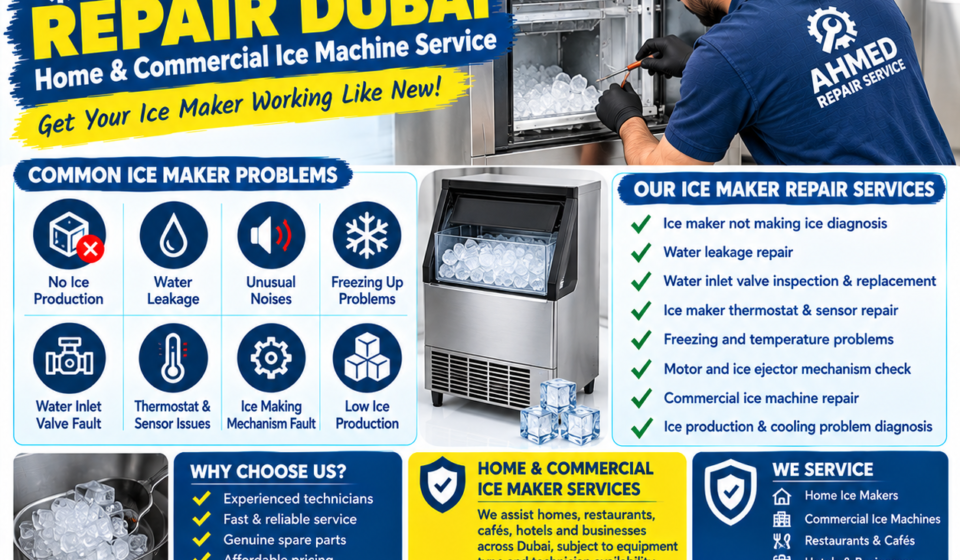
  • Ice Maker Repair Dubai

Commercial Kitchen Appliance Repair

Commercial kitchens use several types of equipment throughout the day. Faults in cooking, washing, refrigeration, and food preparation equipment can disrupt workflow and reduce productivity.

Commercial Oven Repair

Commercial ovens may experience heating problems, uneven cooking, faulty temperature controls, damaged heating elements, or electrical issues. A professional inspection can help identify the cause and determine the appropriate repair.

Commercial Dishwasher Repair

Commercial dishwashers are designed to handle frequent washing cycles. Common issues include poor cleaning performance, water not draining, water leakage, unusual noises, and heating problems.

Blocked filters, drainage faults, water supply issues, or worn components may contribute to these problems.

Commercial Freezer Repair

Commercial freezers must maintain suitable temperatures for the products stored inside. Problems such as insufficient cooling, heavy frost, damaged door seals, and temperature fluctuations require investigation.

Commercial Ice Machine Repair

Ice machines may stop producing ice because of water supply problems, blocked filters, mineral scale, temperature issues, or faulty components. Regular cleaning and maintenance can help reduce avoidable problems.

Before arranging a repair, note any error codes and describe when the fault started. This information can help the technician understand the issue more efficiently.

Commercial Laundry Equipment Repair

Hotels, gyms, salons, staff accommodation facilities, and other businesses may rely on laundry equipment for daily operations. A malfunctioning commercial washing machine or dryer can delay work and create operational difficulties.

Common commercial laundry equipment problems include:

  • Washing machine not draining
  • Drum not spinning correctly
  • Dryer not heating
  • Excessive vibration or unusual noises
  • Water leakage
  • Door-lock problems
  • Interrupted washing cycles
  • Electrical or control panel faults

The cause of a fault depends on the machine’s design, capacity, usage, and condition. Commercial equipment may require different parts and repair procedures from residential appliances.

Contact Ahmed Repair Service to discuss your equipment requirements and confirm whether the appliance can be serviced.

Emergency Commercial Appliance Repair Dubai

Unexpected appliance breakdowns can affect restaurant service, café operations, food storage, and other business activities. When essential equipment fails, prompt assessment can help businesses decide what action to take next.

Commercial appliance problems that may require urgent attention include:

  • Commercial freezer or refrigerator failure
  • Major water leakage from equipment
  • Electrical faults or burning smells
  • Commercial ice machine breakdown
  • Cooking equipment that fails to heat correctly
  • Essential kitchen equipment stopping during operation

If you notice smoke, a burning smell, exposed wiring, or signs of electrical danger, stop using the equipment and isolate its power supply only if it is safe to do so. Contact a qualified professional.

For refrigeration emergencies, protect temperature-sensitive stock and avoid opening freezer or refrigerator doors unnecessarily while arranging suitable backup storage.

When contacting a repair service, provide the appliance type, brand and model if available, the symptoms, and your business location in Dubai. This helps establish the nature of the repair request.

Preventive Maintenance for Commercial Appliances

Preventive maintenance can help businesses identify developing faults before they cause more serious operational disruption. The maintenance requirements depend on the equipment type, usage frequency, manufacturer’s instructions, and working environment.

A practical commercial appliance maintenance routine may include:

  • Cleaning filters, vents, and accessible surfaces according to manufacturer instructions
  • Checking door seals and closures
  • Inspecting equipment for unusual noises or vibrations
  • Monitoring refrigeration temperatures
  • Checking for water leakage and drainage problems
  • Keeping condenser areas clear where applicable
  • Descaling equipment when recommended by the manufacturer
  • Arranging professional inspections when performance changes
  • Keeping records of recurring faults and repairs

Restaurants and cafés should also follow the cleaning and sanitation procedures required for their equipment and food-handling operations.

Regular maintenance does not eliminate every breakdown, but it can help identify wear, airflow restrictions, and other issues that may affect performance.

Why Choose Ahmed Repair Service?

Businesses need clear communication and suitable repair solutions when commercial equipment develops a fault.

Ahmed Repair Service helps customers in Dubai discuss appliance problems and identify the next steps for repair.

When requesting service, you can provide:

  • The type of commercial appliance
  • The brand and model number
  • A description of the fault
  • Any error code displayed
  • Your business location in Dubai
  • Whether the equipment is completely stopped or operating with reduced performance

This information helps establish the repair requirements before an inspection is arranged. Service availability, repair suitability, parts requirements, and response times should be confirmed when booking.

Book Commercial Appliance Repair Dubai

Is your restaurant freezer failing to cool? Has your commercial dishwasher stopped draining? Is your café ice machine no longer producing ice?

Contact Ahmed Repair Service to discuss your commercial appliance repair needs in Dubai. Addressing equipment problems promptly can help reduce business disruption and support smoother daily operations.

Call or WhatsApp: +971 54 503 3792

Website: https://ahmedrepairservice.com/

Service Area: Dubai, United Arab Emirates

Minimize business downtime with professional commercial appliance repair. Contact Ahmed Repair Service to discuss your equipment fault and arrange the next steps.

Frequently Asked Questions

1. Do you provide commercial appliance repair in Dubai?

Ahmed Repair Service accepts enquiries for commercial appliance repair in Dubai. Contact the team with details of your equipment and fault to confirm service availability and repair suitability.

2. Which commercial appliances may need repair?

Commercial appliances can include refrigerators, freezers, dishwashers, ovens, ice machines, coffee machines, and other kitchen or laundry equipment. The available repair service depends on the appliance type and fault.

3. Can you repair restaurant kitchen equipment?

Restaurants can enquire about repairs for common kitchen and refrigeration equipment, including commercial freezers, dishwashers, ovens, and ice machines. Provide the equipment details when contacting the service team.

4. What should I do if my commercial freezer stops cooling?

Check the displayed temperature and look for obvious issues such as a door that has not closed properly. Avoid repeatedly opening the freezer, protect temperature-sensitive stock, and arrange suitable backup storage. Contact a qualified technician if the problem continues.

5. Do you provide commercial ice machine repair in Dubai?

You can contact Ahmed Repair Service to discuss commercial ice machine problems, such as reduced ice production, water supply issues, or interrupted operation. Confirm that your particular machine can be serviced before booking.

6. Can a commercial dishwasher be repaired if it is not draining?

A dishwasher that fails to drain may have a blocked filter, obstructed drain hose, pump fault, or another drainage problem. The cause should be checked before deciding on the appropriate repair.

7. Is preventive maintenance important for commercial appliances?

Yes. Appropriate cleaning, temperature monitoring, filter maintenance, and periodic professional inspections can help identify developing faults and maintain equipment performance.

8. How can I book commercial appliance repair in Dubai?

Call or WhatsApp Ahmed Repair Service at +971 54 503 3792 or visit https://ahmedrepairservice.com/. Share your business location, appliance type, and a brief description of the problem to discuss the next steps.

Washer Dryer Repair Dubai – Combined Washer Dryer Service

Washer Dryer Repair Dubai – Combined Washer Dryer Service

A washer dryer combines washing and drying functions in one appliance, making it a convenient choice for homes and apartments. When the appliance stops spinning, fails to dry clothes, or displays an error code, laundry routines can quickly become difficult.

Ahmed Repair Service provides assistance with Washer Dryer Repair Dubai for common washing, drying, heating, drainage, drum, and motor problems. Whether your combined washer dryer is not completing its cycle or leaving clothes wet, identifying the underlying fault is essential for choosing the right repair.

This guide covers common washer dryer problems, their possible causes, and when to contact a professional technician in Dubai.

1. Washer Dryer Repair Services in Dubai

A combined washer dryer uses several components to wash, spin, and dry clothing. Depending on the model, these may include a drum, motor, pump, heating element, temperature sensors, control board, and ventilation or condensation system.

A fault in one component can affect the washing cycle, drying performance, or both.

Common washer dryer problems

  • Washer dryer not drying clothes properly.
  • Washer dryer drum not spinning.
  • Washer dryer not draining water.
  • Washer dryer not heating during drying.
  • Appliance stopping midway through a cycle.
  • Unusual vibration or noise.
  • Water leaking from the appliance.
  • Error codes appearing on the display.
  • Clothes remaining wet after the cycle.
  • Appliance failing to start or power on.

The correct repair depends on the appliance’s brand, model, symptoms, and condition.

When should you arrange a repair?

Consider professional inspection if the appliance repeatedly stops, fails to complete cycles, leaks water, or produces unusual noises.

If you notice smoke, sparks, a burning smell, or electrical problems, stop using the appliance and disconnect the power only if it is safe to do so.

2. Washing Problems in a Combined Washer Dryer

A washer dryer may develop washing problems even when its drying function still works. These faults can involve the water supply, detergent system, drum, drain pump, or electronic controls.

Washer dryer not washing properly

If clothes remain dirty after a cycle, possible causes include:

  • Insufficient water entering the appliance.
  • A blocked detergent drawer.
  • Incorrect detergent use.
  • An unbalanced or overloaded drum.
  • A malfunctioning water-level sensor.
  • A cycle or control system problem.

Check that the water supply is open, the selected cycle is appropriate, and the drum is not overloaded. Follow the manufacturer’s instructions for detergent quantity and cleaning.

If the washing performance remains poor, a technician can inspect the water inlet, sensors, drum movement, and other relevant components.

Washer dryer not filling with water

A blocked inlet filter, restricted hose, faulty inlet valve, or water supply problem may prevent the machine from filling correctly.

Check accessible hoses for kinks and confirm the water supply is working. If the appliance still does not fill, professional diagnosis may be required.

3. Washer Dryer Not Drying Clothes

One of the most common complaints is a washer dryer that washes clothes successfully but leaves them wet after the drying cycle.

Combined washer dryers may use different drying technologies, so the cause depends on the model.

Why is my washer dryer not drying?

Possible causes include:

  • Overloading the drum.
  • Selecting an unsuitable drying programme.
  • Clothes retaining excessive water because of poor spinning.
  • Restricted airflow or blocked filters, where fitted.
  • A faulty heating element.
  • A temperature sensor problem.
  • A malfunctioning condenser or condensation system.
  • An electronic control fault.

What can you check?

First, remove excess clothing if the drum is overloaded. Review the drying programme and ensure that the selected settings match the load.

Check and clean any user-accessible filters or condensate containers according to the manufacturer’s instructions. Not every washer dryer has a user-removable drying filter or condenser.

If clothes remain wet despite correct settings, a washer dryer technician in Dubai can inspect the heating, moisture detection, airflow, and condensation systems as appropriate for your appliance.

4. Washer Dryer Heating System Problems

The drying system needs to generate and manage heat correctly. If the appliance cannot reach the required temperature, clothes may remain damp or the drying cycle may take longer than expected.

Common heating faults

Faulty heating element: In models that use an electric heating element, a failed element may prevent the dryer from heating.

Temperature sensor failure: A defective sensor may provide incorrect readings and affect the drying cycle.

Thermal protection activation: Some appliances have protective devices that interrupt heating when temperatures become abnormal.

Control board problems: Electronic faults can prevent the heating system from operating correctly.

Airflow or condensation issues: Restricted airflow or poor condensation performance can reduce drying effectiveness in relevant models.

Signs of a heating problem

  • Clothes remain wet after a full drying cycle.
  • Drying takes significantly longer than usual.
  • The appliance stops before drying is complete.
  • The machine displays a heating-related error code.
  • Drying performance changes unexpectedly.

Do not open electrical panels or test heating components yourself. A technician can check the relevant parts and determine whether repair or replacement is necessary.

5. Washer Dryer Not Draining Water

A washer dryer must drain water correctly before it can complete certain washing and spinning stages. Drainage problems can leave clothes soaked and prevent the appliance from progressing to the next stage.

Common drainage problems

  • Blocked drain pump filter.
  • Kinked or obstructed drain hose.
  • Debris in the pump.
  • Faulty drain pump.
  • Drainage system installation problems.
  • A control or water-level sensing fault.

Signs of a drainage issue

  • Water remains inside the drum.
  • Clothes are unusually wet after washing.
  • The appliance refuses to spin.
  • A drain-related error code appears.
  • The machine stops before the cycle finishes.

What should you do?

Check the appliance manual for the correct procedure for inspecting the drain filter. Before opening any drain access point, switch off the machine, disconnect power, and prepare for water spillage. Water inside the appliance may be hot.

If you are unsure how to access the filter safely, arrange professional assistance.

A technician can inspect the pump, hose, filter, and related controls to identify the cause of the drainage problem.

6. Drum and Motor Problems

The drum and motor are essential for washing, spinning, and removing excess water from clothes. If the drum does not rotate correctly, both washing and drying performance may suffer.

Washer dryer not spinning

Possible causes include:

  • An unbalanced load.
  • An overloaded drum.
  • A drainage problem.
  • A worn or damaged drive component.
  • A motor fault.
  • A speed sensor or control issue.
  • A door-lock problem.

Start by checking whether the load is uneven or exceeds the manufacturer’s recommended capacity. If water remains inside the drum, investigate the drainage issue before assuming the motor is faulty.

Unusual drum noises

Grinding, banging, squealing, or excessive vibration may indicate an unbalanced load, foreign object, worn bearing, damaged drum support, or another mechanical problem.

Stop the appliance if the noise is severe or accompanied by burning smells, excessive movement, or visible damage.

Professional drum and motor inspection

A technician may inspect:

  • Drum movement and alignment.
  • Motor operation.
  • Drive components, where fitted.
  • Bearings and drum supports.
  • Door-lock and speed sensors.
  • Electrical connections and controls.

Accurate diagnosis helps avoid replacing expensive components unnecessarily.

7. Washer Dryer Error Codes and Control Problems

Modern washer dryers use electronic controls to monitor water levels, temperatures, drum movement, drainage, and other operating conditions.

When the appliance detects a fault, it may display an error code or stop the cycle.

Common reasons error codes appear

  • Water supply interruptions.
  • Drainage restrictions.
  • Door-lock problems.
  • Heating system faults.
  • Motor or drum movement issues.
  • Temperature sensor failures.
  • Communication or control board faults.

Error codes vary by manufacturer and model. The same code should not be assumed to mean the same thing across different brands.

What should you do when an error code appears?

  1. Note the exact error code.
  2. Check the user manual for its meaning.
  3. Confirm that the water supply and drain hose are functioning normally.
  4. Check the door is properly closed.
  5. Follow the manufacturer’s recommended troubleshooting steps.

Avoid repeatedly resetting the appliance without identifying a recurring fault.

When contacting Ahmed Repair Service, provide the brand, model number, and error code if available. This information can help clarify the issue before an inspection.

8. Washer Dryer Repair vs Replacement

When a combined washer dryer develops a fault, deciding between repair and replacement depends on the appliance’s condition, repair cost, age, and availability of parts.

When repair may be suitable

Repair may be a practical option when:

  • The appliance is otherwise in good condition.
  • The fault involves a replaceable component.
  • Compatible parts are available.
  • The repair cost is reasonable compared with replacement.
  • The appliance has previously operated reliably.

Examples may include certain drainage faults, defective switches, inlet valve problems, or replaceable sensors.

When replacement may be worth considering

Replacement may be more practical when:

  • The appliance has multiple major faults.
  • The drum or sealed components are severely damaged.
  • Compatible parts are unavailable.
  • Repair costs are high relative to the appliance’s value.
  • Repeated breakdowns make continued ownership uneconomical.

Get an assessment before deciding

A professional inspection can help identify the fault and estimate the repair required. Compare that assessment with the cost of a suitable replacement before making a decision.

There is no single repair-versus-replacement rule that applies to every washer dryer.

Washer Dryer Repair Dubai by Ahmed Repair Service

If your combined washer dryer is not drying, not spinning, not draining, or displaying an error code, professional diagnosis can help identify the underlying problem.

Ahmed Repair Service assists customers across Dubai with washer dryer and related appliance repair requirements, subject to equipment type and technician availability.

Our washer dryer repair assistance may include

  • Washer dryer washing and spinning faults.
  • Drying performance problems.
  • Heating system troubleshooting.
  • Drain pump and water drainage issues.
  • Drum and motor diagnosis.
  • Error code troubleshooting.
  • Water leakage problems.
  • Control and sensor faults.
  • Repair and replacement assessments.

When contacting the service team, provide your appliance brand, model, symptoms, and any error code displayed on the control panel.

Related Repair Services

You can also explore these related services:

These links currently point to the main website. Replace them with the dedicated service-page URLs when available.

Frequently Asked Questions

1. Why is my washer dryer not drying clothes?

Possible causes include an overloaded drum, incorrect drying settings, poor spinning, a heating element fault, restricted airflow, or a condensation system problem. The cause depends on your appliance model.

2. Why is my washer dryer not spinning?

An unbalanced load, drainage problem, motor fault, door-lock issue, or electronic control problem may prevent spinning. Check the load and drainage first, following the manufacturer’s instructions.

3. Why is my washer dryer not draining water?

A blocked filter, restricted drain hose, faulty pump, or control problem may prevent drainage. If water remains in the drum, arrange an inspection if safe basic checks do not resolve the issue.

4. Can a washer dryer work if its heating element is faulty?

Some washer dryers may continue washing while their drying function fails if the heating element is defective. However, not all models use the same heating technology, so proper diagnosis is necessary.

5. Why does my washer dryer stop midway through a cycle?

The appliance may stop because of a drainage fault, water supply problem, overheating protection, door-lock issue, sensor fault, or electronic error. Note any displayed error code before arranging service.

6. Is it worth repairing a washer dryer?

Repair may be worthwhile when the fault is limited and compatible parts are available. If the appliance has several major faults or repair costs approach replacement costs, replacement may be the more practical choice.

7. How can I find a washer dryer repair technician near me in Dubai?

Contact Ahmed Repair Service at +971 54 503 3792. Share your location in Dubai, appliance model, and the problem so the team can discuss service availability.

8. How can I book washer dryer repair in Dubai?

Call or WhatsApp Ahmed Repair Service at +971 54 503 3792. Explain the fault and provide the appliance brand, model, and error code if available to help assess your repair requirements.

Book Washer Dryer Repair in Dubai

A faulty washer dryer can interrupt your laundry routine and leave clothes wet, poorly washed, or stuck inside the drum. Addressing the problem promptly can help identify the cause and prevent unnecessary component replacement.

Ahmed Repair Service assists with washer dryer, washing machine, clothes dryer, and related home appliance problems across Dubai.

Book washer-dryer repair in Dubai. Contact Ahmed Repair Service today to discuss your appliance problem and arrange an inspection based on availability.

Kitchen Hood Repair Dubai – Cooker Hood & Extractor Fan Service

Kitchen Hood Repair Dubai – Cooker Hood & Extractor Fan Service

A properly working kitchen hood helps remove cooking smoke, grease, heat, and unwanted odours from your kitchen. When the hood fan stops spinning, the extractor becomes noisy, or the airflow weakens, cooking can become uncomfortable and ventilation may be reduced.

Ahmed Repair Service provides professional Kitchen Hood Repair Dubai services for residential and commercial kitchens, subject to equipment type and technician availability. Whether you need cooker hood troubleshooting, extractor fan repair, lighting repairs, or motor replacement, identifying the cause helps determine the appropriate solution.

If your kitchen hood is not working correctly, this guide explains common problems, possible causes, repair options, and maintenance tips.

1. Kitchen Hood Repair Services in Dubai

Kitchen hoods contain several components that work together to remove smoke, grease, and cooking odours. These may include an extraction fan, motor, filters, lighting, switches, control boards, and ductwork.

A fault in any of these components can affect the hood’s performance.

Common kitchen hood problems

  • Kitchen hood not turning on.
  • Hood fan not spinning.
  • Extractor fan making unusual noises.
  • Weak suction or poor airflow.
  • Kitchen hood light not working.
  • Grease filter blockage.
  • Damaged fan blades or motor.
  • Faulty switches or speed controls.
  • Electrical connection problems.
  • Hood motor overheating or stopping intermittently.

The correct repair depends on the hood’s brand, model, installation, and symptoms. Some problems involve cleaning or filter replacement, while others require electrical diagnosis or component replacement.

When should you arrange a repair?

Consider professional inspection when the hood repeatedly stops, produces burning smells, trips an electrical breaker, or fails to remove cooking smoke effectively.

If you notice smoke from the motor, sparks, or signs of overheating, switch the appliance off if safe and arrange professional assistance before using it again.

2. Kitchen Hood Motor Problems

The motor powers the fan that draws air through the hood and moves it into the exhaust duct or filtration system. If the motor becomes faulty, the hood may stop extracting air or operate inconsistently.

Signs of a faulty hood motor

  • The hood turns on, but the fan does not rotate.
  • The fan starts and stops unexpectedly.
  • The motor produces humming or grinding sounds.
  • Extraction performance has decreased significantly.
  • The motor becomes unusually hot.
  • The hood trips the electrical breaker during operation.

These symptoms can also result from a failed capacitor, damaged wiring, obstructed fan blades, or a faulty control system. A technician should test the relevant components before recommending motor replacement.

Kitchen hood motor repair

A professional inspection may include:

  • Checking the motor’s operating condition.
  • Inspecting fan movement and obstructions.
  • Testing relevant electrical components.
  • Checking speed controls and wiring.
  • Assessing whether repair or replacement is appropriate.

If the motor is damaged beyond practical repair, a compatible replacement may be necessary. The replacement must match the hood’s specifications and installation requirements.

3. Extractor Fan Problems and Unusual Noise

A kitchen extractor hood should operate without excessive vibration or grinding. Loud or unusual noises can indicate a mechanical issue that requires attention.

Why is the extractor fan making noise?

Common causes include:

Loose components: Loose screws, covers, or internal fittings may vibrate when the fan operates.

Grease buildup: Accumulated grease and dirt can affect fan movement and contribute to noise.

Damaged fan blades: Bent or damaged blades may create vibration or reduce airflow.

Worn motor bearings: Worn components can cause grinding or rumbling sounds.

Ductwork restrictions: Blocked or poorly secured ducting may affect airflow and create additional noise.

How can the noise be reduced?

Switch off the hood before carrying out any permitted external cleaning or filter removal. Clean removable filters according to the manufacturer’s instructions and check for visible obstructions without reaching into moving parts.

If the noise continues after routine cleaning, a technician can inspect the fan, motor, mounting points, and ductwork.

Important: Do not operate a hood with damaged fan blades or a motor showing signs of overheating.

4. Kitchen Hood Lighting Problems

Many cooker hoods include built-in lighting to illuminate the cooking area. When the lights stop working, the issue may involve the bulb, LED module, switch, wiring, or electronic control.

Common reasons hood lights stop working

  • A failed bulb.
  • A damaged LED light module.
  • A faulty lighting switch.
  • A loose or damaged connection.
  • A problem with the control board.
  • An electrical supply issue.

What should you check?

First, confirm that the appliance has power and check whether the fan and other functions are working normally.

If the hood uses replaceable bulbs, follow the manufacturer’s instructions for selecting and replacing the correct type. Disconnect power before permitted maintenance.

If the light still does not work, professional testing may be needed to determine whether the problem involves the switch, wiring, LED driver, or control board.

Do not attempt electrical repairs while the appliance is connected to power.

5. Grease Filters, Airflow and Extraction Problems

A kitchen hood needs unobstructed airflow to remove cooking fumes effectively. Grease filters collect airborne grease, but accumulated residue can restrict air movement if the filters are not cleaned regularly.

Why is my kitchen hood not extracting properly?

Possible causes include:

  • Dirty or clogged grease filters.
  • A blocked or restricted exhaust duct.
  • A weak or faulty fan motor.
  • Damaged fan blades.
  • Incorrect installation.
  • A restricted external vent.
  • A clogged recirculation filter.

Cleaning grease filters

Many kitchen hoods use removable metal grease filters. Depending on the manufacturer’s instructions, these may be cleaned using an approved method or suitable dishwasher cycle.

Allow filters to dry fully before reinstalling them. Replace damaged filters and use compatible parts.

Some recirculating models also use charcoal filters to reduce cooking odours. These may require periodic replacement because they cannot always be restored through washing.

Improving kitchen hood airflow

  • Clean grease filters regularly.
  • Keep accessible vents free from obstructions.
  • Use the appropriate fan speed for the cooking activity.
  • Inspect ductwork when extraction remains weak.
  • Arrange professional inspection if the motor or controls appear faulty.

If cleaning does not restore airflow, the issue may involve the fan, motor, ductwork, or installation rather than the filter alone.

6. Kitchen Hood Electrical Faults

Kitchen hoods contain electrical connections, switches, motors, lighting components, and sometimes electronic control boards. An electrical fault can affect one function or prevent the entire appliance from operating.

Signs of an electrical problem

  • The kitchen hood does not turn on.
  • The controls stop responding.
  • The fan operates intermittently.
  • The lights and fan fail together.
  • The breaker trips when the hood starts.
  • There is a burning smell or visible electrical damage.

Possible causes

Electrical problems may result from damaged wiring, faulty switches, loose connections, a failed control board, or a defective motor drawing abnormal current.

A technician can inspect the electrical supply, test relevant components, and identify the cause before recommending repairs.

Safety warning: If the hood sparks, emits smoke, or repeatedly trips the breaker, stop using it. Do not repeatedly reset the breaker or open electrical components yourself.

Ahmed Repair Service can assist with kitchen hood troubleshooting and related appliance electrical issues across Dubai, subject to equipment type and technician availability.

7. Hood Motor Replacement and Component Repairs

Sometimes a kitchen hood cannot be restored through cleaning or minor repairs. A damaged motor, broken fan assembly, failed switch, or defective electronic component may need replacement.

When is motor replacement necessary?

Motor replacement may be considered when testing confirms that the motor has failed, is severely damaged, or cannot be repaired economically.

However, weak suction or a fan that does not spin does not automatically mean the motor needs replacement. A technician should first check for obstructions, electrical supply problems, control faults, and other possible causes.

Choosing the correct replacement part

The replacement motor or component must be compatible with the appliance’s model and technical specifications.

Before arranging a repair, provide:

  • Kitchen hood brand and model.
  • A description of the fault.
  • Whether the fan, lights, and controls work.
  • Any unusual noise or burning smell.
  • Photos of the model label, if available.

This information helps the technician understand the appliance and identify suitable replacement options.

Repair or replacement?

The decision depends on the fault, availability of compatible parts, equipment age, and repair cost. A professional assessment can help you compare the practical options.

8. Kitchen Hood Maintenance for Homes and Businesses

Regular maintenance helps keep kitchen hoods operating efficiently and reduces the risk of grease accumulation and preventable faults.

Residential kitchens and commercial kitchens may have different cleaning requirements based on usage, equipment design, and local safety requirements.

Recommended maintenance practices

1. Clean grease filters regularly

Follow the manufacturer’s cleaning schedule and instructions. Heavy cooking activity may require more frequent cleaning.

2. Inspect the fan and airflow

Pay attention to reduced suction, vibration, or changes in operating noise.

3. Maintain the exhaust duct

Have ductwork and ventilation components inspected and cleaned as appropriate for the installation and level of use.

4. Check lighting and controls

Address intermittent operation, faulty switches, and damaged control components promptly.

5. Avoid excessive grease buildup

Clean accessible hood surfaces using suitable products and avoid damaging electrical components or finishes.

6. Arrange professional inspections

Persistent noise, weak airflow, motor overheating, and electrical faults should be investigated by a qualified technician.

7. Follow the appliance manual

Cleaning methods and replacement intervals vary by model. Use compatible filters, bulbs, motors, and other components.

Regular maintenance can support better airflow, cleaner operation, and a longer service life, although it cannot prevent every equipment failure.

Kitchen Hood Repair Dubai by Ahmed Repair Service

If your kitchen hood is not working, the extractor fan has stopped spinning, or the motor is making unusual noises, professional diagnosis can help identify the problem.

Ahmed Repair Service assists with kitchen hood and related appliance repair requirements across Dubai, subject to equipment type and technician availability.

Our kitchen hood repair assistance may include

  • Kitchen hood not working diagnosis.
  • Cooker hood and range hood troubleshooting.
  • Extractor fan noise and rotation problems.
  • Hood lighting and switch issues.
  • Grease filter and airflow problems.
  • Hood motor testing and replacement assessment.
  • Electrical fault diagnosis.
  • Related kitchen appliance repair assistance.

For issues involving other kitchen appliances, you can also explore these related services:

These links currently point to the main website. Replace them with the dedicated service-page URLs when available.

Frequently Asked Questions

1. Why is my kitchen hood not working?

Common causes include a power supply issue, faulty switch, damaged wiring, a failed motor, or a control board problem. If basic checks do not resolve the issue, arrange a professional inspection.

2. Why is my cooker hood fan not spinning?

The fan may be obstructed, the motor may have failed, or an electrical component may be preventing operation. The cause should be identified before replacing parts.

3. Why is my extractor hood making a loud noise?

Excessive noise can result from loose fittings, grease buildup, damaged fan blades, worn motor bearings, or ductwork problems. Stop using the appliance if you notice severe vibration or signs of overheating.

4. Can a clogged grease filter reduce kitchen hood suction?

Yes. Grease buildup can restrict airflow and reduce extraction performance. Clean or replace the filter according to the manufacturer’s instructions.

5. Why is my kitchen hood light not working?

The problem may involve a failed bulb, LED module, switch, wiring connection, or control board. If replacing an accessible bulb does not resolve the issue, professional diagnosis may be required.

6. When does a kitchen hood motor need replacement?

Motor replacement may be necessary when testing confirms a motor failure or severe damage. Other faults, such as an obstruction or failed electrical component, can cause similar symptoms, so diagnosis is important.

7. How often should I clean my kitchen hood filters?

Cleaning frequency depends on the manufacturer’s recommendations and how often you cook. Frequent or heavy cooking generally requires more frequent filter cleaning to prevent grease buildup and maintain airflow.

8. How can I book kitchen hood repair in Dubai?

Contact Ahmed Repair Service by phone or WhatsApp at +971 54 503 3792. Share the hood’s brand, model, and symptoms so the team can discuss your repair requirements and technician availability.

Book Professional Kitchen Hood Repair in Dubai

A faulty kitchen hood can affect ventilation, increase cooking odours, and make your kitchen less comfortable. Whether you need cooker hood troubleshooting, extractor fan repair, lighting diagnosis, or motor replacement, addressing the problem early can help restore normal operation.

Ahmed Repair Service assists homeowners and businesses with kitchen hood and related appliance repair requirements across Dubai.

Book professional kitchen hood repair today. Contact Ahmed Repair Service to discuss your appliance problem and arrange an inspection based on availability.

Commercial Ice Machine Repair Dubai – Fast Business Equipment Service

Commercial Ice Machine Repair Dubai – Fast Business Equipment Service

Commercial ice machines are essential for restaurants, cafés, hotels, catering companies, and other businesses across Dubai. When an ice machine stops producing ice, leaks water, or develops a cooling problem, it can disrupt daily operations and affect customer service.

Professional Commercial Ice Machine Repair Dubai services help identify equipment faults and restore reliable ice production. Whether your business uses an undercounter ice maker, a modular ice machine, or a commercial ice production unit, early diagnosis can help reduce downtime and prevent further equipment damage.

Ahmed Repair Service assists businesses with commercial ice machine and related refrigeration problems across Dubai, subject to equipment type and technician availability.

If your commercial ice machine is not working correctly, this guide explains common faults, repair considerations, and preventive maintenance practices.

1. Commercial Ice Machine Repair in Dubai

Commercial ice machines operate under frequent demand, particularly in food service and hospitality environments. Continuous use, mineral deposits, restricted water flow, poor ventilation, and worn components can affect performance over time.

A commercial ice machine may require professional inspection when it produces less ice than usual, makes unusual noises, leaks water, or stops operating altogether.

Common commercial ice machine problems

  • Ice machine not producing ice.
  • Reduced or inconsistent ice production.
  • Ice machine leaking water.
  • Small, cloudy, or irregularly shaped ice cubes.
  • Water supply or filtration problems.
  • Frozen water lines or blocked components.
  • Faulty temperature sensors or control systems.
  • Compressor and refrigeration problems.
  • Unusual operating noises.
  • Repeated shutdowns or warning indicators.

The cause of each problem can vary by machine model. A proper inspection helps determine whether the fault involves the water system, ice-making mechanism, electrical controls, or refrigeration components.

Why prompt repairs matter

A faulty ice machine can affect beverage preparation, food service, and customer satisfaction. For businesses that rely on a continuous ice supply, delaying repairs can create operational difficulties.

Arranging commercial ice maker repair in Dubai helps businesses identify faults early and make informed decisions about repair or component replacement.

2. Restaurant and Café Ice Machine Repair

Restaurants and cafés need a consistent ice supply for cold beverages, food presentation, and other daily tasks. A malfunctioning ice machine can slow service during busy lunch periods, evenings, and weekends.

Common restaurant ice machine issues

Ice machine not producing enough ice: High demand, restricted water flow, dirty components, or cooling faults may reduce production.

Slow ice production: A dirty condenser, restricted ventilation, water supply issue, or refrigeration problem may affect the machine’s output.

Water leakage: Loose connections, blocked drains, damaged hoses, or overflowing components may cause leaks.

Unusual noises: Fan, motor, pump, or compressor problems may produce abnormal operating sounds.

Poor ice quality: Mineral deposits, filter problems, or inadequate cleaning may affect the appearance and quality of ice.

Restaurant ice machine repair process

A professional inspection may include:

  • Checking the water supply and drainage system.
  • Inspecting the ice-making cycle.
  • Examining filters and accessible water lines.
  • Checking condenser ventilation and cleanliness.
  • Assessing electrical controls and sensors.
  • Investigating cooling and compressor-related symptoms.

Regular cleaning according to the manufacturer’s instructions also helps maintain ice quality and reduce avoidable performance issues.

For restaurant owners searching for Restaurant Ice Machine Repair Dubai, timely diagnosis can help minimize disruption and support smoother daily operations.

3. Hotel and Catering Ice Machine Repair

Hotels and catering businesses may depend on multiple ice machines to support restaurants, bars, banquet facilities, room service, and event operations.

An equipment fault can become particularly disruptive during busy service periods or large events.

Common hotel and catering equipment problems

  • Ice machines producing insufficient quantities.
  • Equipment shutting down during operation.
  • Water leaking around the machine.
  • Ice production stopping unexpectedly.
  • Poor drainage or water flow.
  • Inconsistent ice cube size.
  • Refrigeration or temperature-related faults.

The right repair approach depends on the machine’s capacity, installation, usage, and fault symptoms.

Commercial ice machine support for hospitality businesses

Ahmed Repair Service assists with commercial appliance and refrigeration problems in Dubai. When contacting the team, provide the machine brand, model, approximate age, and a description of the fault if available.

This information can help clarify the equipment type and the nature of the service required.

Businesses searching for Hotel Ice Machine Repair Dubai should arrange an inspection when recurring faults affect ice availability or normal operations.

4. Common Commercial Ice Machine Faults

Commercial ice machines contain water-handling, mechanical, electrical, and refrigeration components. Problems in any of these areas can interrupt the ice-making cycle.

Ice machine not producing ice

An ice machine may stop making ice because of:

  • An interrupted water supply.
  • A blocked water filter.
  • A faulty inlet valve.
  • Incorrect operating conditions.
  • A defective sensor or control module.
  • A refrigeration fault.

Start with simple external checks, such as confirming the water supply and reviewing the manufacturer’s operating instructions. If the problem continues, arrange a professional inspection.

Ice machine leaking water

Water leakage can result from blocked drains, damaged water lines, loose connections, or overflowing internal components.

If you notice a leak, follow the manufacturer’s safety instructions and shut off the water supply if it is safe to do so. Keep water away from electrical outlets and equipment. A technician can identify the source and recommend the appropriate repair.

Ice machine producing small or irregular cubes

Small or irregular ice cubes can indicate restricted water flow, mineral buildup, incorrect fill levels, or a problem with the freezing cycle.

A technician may need to inspect the water inlet, filtration system, evaporator, and machine controls.

Ice machine making unusual noises

Unusual sounds can come from a fan, pump, motor, compressor, or loose component. Stop using the machine if it shows signs of electrical damage, severe vibration, overheating, or other potentially unsafe conditions.

A professional assessment can help identify the source before additional damage occurs.

5. Water Supply and Filtration Problems

Commercial ice machines require an appropriate water supply to produce ice consistently. Water pressure, filtration, drainage, and water quality can all influence performance.

Blocked water filters

Filters can accumulate sediment and other material over time. A clogged filter may restrict water flow and contribute to slow or inconsistent ice production.

Follow the manufacturer’s recommended filter replacement schedule and use a compatible filter.

Water inlet valve problems

The inlet valve controls water entering the machine. If the valve becomes restricted or fails, the machine may not fill correctly.

Possible symptoms include:

  • An empty ice-making tray.
  • Reduced ice production.
  • Inconsistent filling.
  • Repeated interruptions in the ice-making cycle.

A technician can test the valve and inspect the water supply before recommending replacement.

Drainage problems

Commercial ice machines must drain water correctly. A blocked or incorrectly configured drain may cause water to collect around the machine or interfere with normal operation.

Keep accessible drainage areas clean according to the manufacturer’s instructions. Persistent leaks or drainage issues should be assessed professionally.

Why water system maintenance matters

Regular filter replacement, cleaning, and inspection can help reduce avoidable water flow problems. The exact maintenance schedule depends on the equipment model, water conditions, and manufacturer’s requirements.

For commercial kitchens, maintaining clean equipment and following applicable food-safety procedures is particularly important.

6. Compressor and Cooling Problems

Commercial ice machines rely on refrigeration components to remove heat and freeze water. If the cooling system does not operate correctly, ice production may slow down or stop.

Possible cooling system faults

  • Dirty or obstructed condenser coils.
  • Poor airflow around the machine.
  • A malfunctioning fan.
  • Faulty temperature sensors.
  • Electrical or control system problems.
  • Compressor failure.
  • Refrigerant leaks or other sealed-system faults.

Signs of a cooling problem

You may notice that the machine runs for long periods without producing enough ice, stops during the freezing cycle, or produces less ice than expected.

These symptoms do not automatically mean the compressor has failed. Water supply problems, ventilation restrictions, and other faults can produce similar results.

Professional compressor inspection

A qualified technician can examine the machine’s operating conditions, ventilation, electrical components, and refrigeration performance to identify the cause.

Refrigerant handling and sealed-system repairs require appropriate expertise and equipment. Do not attempt to open refrigerant lines or carry out compressor repairs yourself.

If the problem involves a connected cold room or larger refrigeration installation, related cold storage repair or chiller repair may also need consideration.

7. Preventive Maintenance for Commercial Ice Machines

Preventive maintenance can help reduce unexpected breakdowns, maintain ice quality, and support reliable equipment operation.

The maintenance frequency should reflect the manufacturer’s instructions, water quality, operating environment, and daily production demand.

Recommended maintenance practices

1. Clean the machine regularly

Follow the manufacturer’s cleaning and sanitizing procedures. Use approved products and observe the required contact and rinsing instructions.

2. Replace water filters on schedule

A suitable replacement schedule helps maintain water flow and supports consistent ice production.

3. Inspect water lines and drains

Check accessible connections and drainage areas for visible leaks, blockages, or damage.

4. Maintain proper ventilation

Keep the manufacturer’s specified clearance around the machine. Remove dust and debris from accessible ventilation areas according to the service manual.

5. Monitor ice production

Pay attention to changes in production rate, cube shape, machine cycle duration, and unusual noises.

6. Arrange professional inspections

Persistent performance problems, electrical faults, refrigeration issues, or repeated leaks should be assessed by a qualified technician.

7. Keep maintenance records

Restaurants, hotels, and catering businesses can record filter replacements, cleaning dates, service visits, and recurring faults. This helps identify patterns and plan maintenance.

Benefits of preventive maintenance

  • Reduced risk of unexpected equipment interruptions.
  • Earlier identification of developing faults.
  • More consistent ice production.
  • Better monitoring of water filtration and drainage.
  • Improved planning for repair and maintenance costs.

Preventive maintenance cannot eliminate every breakdown, but it can help businesses manage equipment more effectively.

8. Commercial Ice Machine Repair for Dubai Businesses

When a commercial ice machine stops working, an accurate diagnosis is essential. Replacing parts without identifying the underlying cause may lead to unnecessary expenses or recurring problems.

Ahmed Repair Service assists customers across Dubai with commercial appliance and refrigeration concerns, subject to equipment type and technician availability.

Our commercial ice machine repair assistance may include

  • Diagnosing an ice machine not producing ice.
  • Investigating water leakage and drainage faults.
  • Checking water inlet valves and filtration issues.
  • Assessing ice maker modules and sensors.
  • Investigating ice production and freezing-cycle problems.
  • Identifying ventilation and cooling concerns.
  • Assessing compressor-related symptoms.
  • Recommending suitable repair or replacement options.

What information should you provide?

When contacting a technician, try to share:

  • Machine brand and model.
  • Type of ice machine.
  • Description of the problem.
  • Any displayed error code.
  • Whether the machine still runs or produces some ice.
  • Any visible leakage or unusual noise.

Providing these details can help the technician understand the issue and prepare for the inspection.

Frequently Asked Questions

1. What causes a commercial ice machine to stop producing ice?

Common causes include restricted water flow, a clogged filter, a faulty inlet valve, dirty components, incorrect operating conditions, defective sensors, or refrigeration problems. A professional diagnosis can identify the actual fault.

2. How do I find commercial ice machine repair in Dubai?

Contact a repair service that handles commercial ice machines and related refrigeration equipment. Provide the machine’s brand, model, symptoms, and business location so the service requirements can be assessed.

3. Why is my restaurant ice machine producing less ice than usual?

Reduced production can result from high demand, poor ventilation, a dirty condenser, restricted water flow, mineral buildup, or a cooling fault. Cleaning and basic external checks may help, but persistent problems require inspection.

4. Can a blocked water filter stop a commercial ice machine?

Yes. A blocked filter can restrict the water supply and reduce ice production. Check the manufacturer’s replacement schedule and install a compatible filter when required.

5. Why is my commercial ice machine leaking water?

Possible causes include blocked drainage, damaged hoses, loose connections, or overflowing internal components. Water leaks near electrical equipment should be treated carefully, and the machine should be made safe according to the manufacturer’s instructions.

6. Can a faulty compressor affect commercial ice production?

Yes. A compressor or another refrigeration component that fails to provide sufficient cooling can interrupt ice production. However, a technician must test the system to determine whether the compressor is actually responsible.

7. How often should a commercial ice machine be maintained?

Maintenance frequency depends on the model, usage, water quality, and manufacturer’s recommendations. Regular cleaning, filter replacement, drainage checks, and professional servicing can help prevent avoidable problems.

8. Can I arrange commercial ice machine repair for a hotel or catering business in Dubai?

Yes. Contact Ahmed Repair Service to discuss your equipment and symptoms. Share the machine model and the nature of the fault so the team can assess the service requirements and technician availability.

Minimize Commercial Downtime With Professional Repair

A malfunctioning ice machine can disrupt restaurants, cafés, hotels, catering businesses, and other commercial operations. Addressing water supply, filtration, mechanical, and cooling faults promptly can help reduce interruptions and support reliable ice production.

Ahmed Repair Service provides assistance with commercial ice machine, ice maker, freezer, and related refrigeration problems across Dubai.

Need Commercial Ice Machine Repair Dubai? Contact Ahmed Repair Service to discuss your equipment problem and arrange an inspection based on availability.

Ice Maker Not Making Ice Dubai – Causes & Repair Guide

Ice Maker Not Making Ice Dubai – Causes & Repair Guide

An ice maker that suddenly stops producing ice can be frustrating, especially during Dubai’s hot weather. Whether you use a refrigerator ice maker at home or a commercial ice machine in a restaurant, café, hotel, or office, the problem can interrupt your daily routine and business operations.

Ahmed Repair Service provides professional ice maker repair in Dubai to help diagnose problems with water supply, temperature, frozen components, filters, valves, and ice production systems. Identifying the cause early can help prevent further damage and restore normal ice production.

If your ice maker is running but not making ice, producing only a few cubes, or stopping completely, this guide explains the common causes and when to contact a professional technician.

Why Does an Ice Maker Stop Producing Ice?

An ice maker requires a reliable water supply, suitable freezing temperatures, and properly functioning electrical and mechanical components. If any of these conditions are missing, the machine may stop producing ice.

Common reasons an ice maker stops working include:

  • A disconnected or restricted water supply.
  • A clogged water filter.
  • A faulty water inlet valve.
  • A frozen ice maker fill tube.
  • Incorrect freezer temperature.
  • A malfunctioning ice maker module or sensor.
  • A damaged ice ejector mechanism.
  • A refrigeration or compressor problem.

Some issues can be identified through basic checks, while others require professional testing. Before attempting any inspection, follow the manufacturer’s instructions and disconnect power when appropriate.

1. Water Supply Problems

A water supply issue is one of the most common reasons an ice maker stops making ice. Even when the refrigerator or ice machine is cooling normally, insufficient water can prevent ice production.

Common water supply issues

Closed water supply valve: The valve supplying water to the ice maker may be closed or partially closed.

Kinked water line: A bent, crushed, or restricted water hose can reduce water flow.

Low water pressure: Insufficient pressure may prevent the ice maker from filling its tray correctly.

Water inlet valve failure: The inlet valve controls the flow of water into the ice maker. If it becomes defective or blocked, the machine may not receive enough water.

What should you check?

  • Confirm that the water supply is turned on.
  • Inspect the accessible water line for visible kinks or damage.
  • Check whether the refrigerator’s water dispenser, if fitted, is also experiencing problems.
  • Look for water leakage around accessible connections.

If the water supply appears normal but the ice maker still does not fill, an ice maker technician in Dubai can test the inlet valve, water pressure, and related components.

2. Temperature Problems

An ice maker needs an appropriate freezing environment to produce ice consistently. If the freezer is too warm, water may not freeze properly, or the ice maker may pause production.

Temperature problems can occur because of blocked air vents, a faulty thermostat, damaged door seals, or a refrigeration system malfunction.

Signs of a temperature-related problem

  • Ice production has slowed down significantly.
  • Ice cubes are soft or partially frozen.
  • Food in the freezer is not staying frozen.
  • The appliance runs for long periods without reaching the required temperature.
  • Ice melts and refreezes inside the ice bin.

Check the appliance’s temperature setting and make sure food packages are not blocking internal air vents. Keep the door closed as much as possible and allow time for the freezer to return to its normal operating temperature.

If the freezer remains too warm, the issue may involve the evaporator fan, defrost system, thermostat, refrigerant circuit, or compressor. These components should be diagnosed by a qualified technician.

For persistent cooling issues, professional freezer repair in Dubai may be necessary before ice production can return to normal.

3. Faulty Ice Maker Module

The ice maker module controls key stages of ice production, including filling, freezing, and ejecting ice cubes. Depending on the model, it may contain electronic controls, sensors, a motor, and a harvesting mechanism.

If the module fails, the machine may stop making ice even when water is available and the freezer is cold enough.

Common symptoms of a module problem

  • The ice maker does not start a production cycle.
  • Ice cubes remain stuck in the tray.
  • The ejector mechanism does not move.
  • The machine produces ice intermittently.
  • The ice maker stops responding to its controls.

A faulty sensor, motor, wiring connection, or control board may produce similar symptoms. Therefore, replacing the entire module without testing is not always necessary.

A professional ice maker repair Dubai service can inspect the module, test relevant electrical connections, and determine whether a component needs repair or replacement.

4. Frozen Fill Tube and Other Frozen Components

The fill tube carries water into the ice maker tray. If the tube becomes frozen, water cannot reach the tray, and ice production may stop.

A frozen fill tube can result from water dripping into the tube, an inlet valve that does not close properly, or an appliance-specific temperature or design issue.

How to identify a frozen fill tube

Possible signs include:

  • The ice tray remains empty.
  • The water supply appears normal, but no water enters the tray.
  • Ice production stops unexpectedly.
  • Ice forms around the water inlet area.

Avoid using knives, screwdrivers, heat guns, or other sharp or high-heat tools to remove ice. These can damage plastic tubing, electrical components, and surrounding parts.

If the fill tube is frozen repeatedly, simply thawing it may not resolve the underlying problem. The water inlet valve, fill timing, and other relevant components may need inspection.

A technician can safely assess the blockage and identify why it keeps returning.

5. Water Filter and Valve Issues

A refrigerator water filter removes certain impurities from the water supply. Over time, the filter can become clogged, reducing the amount of water reaching the ice maker.

A worn or blocked filter may cause slow ice production, small ice cubes, or no ice at all.

Signs of a blocked filter

  • Ice cubes are smaller than usual.
  • Ice production becomes slower over time.
  • Water flow from the dispenser decreases.
  • The filter replacement indicator appears, if the appliance has one.

Check the manufacturer’s recommended filter replacement schedule and use a compatible replacement filter. After changing it, follow the appliance instructions for flushing the system.

What if the inlet valve is faulty?

The water inlet valve may fail electrically, become restricted, or stop closing correctly. This can prevent water from entering the tray or allow unwanted water flow that contributes to freezing problems.

A technician can test the valve and inspect the filter and water line before recommending a replacement.

Important: Do not attempt electrical testing or valve replacement while the appliance is connected to power or water.

6. Compressor or Refrigeration System Problems

An ice maker depends on the appliance’s refrigeration system to maintain the required temperature. If the refrigerator or freezer cannot cool adequately, ice production may slow down or stop.

Possible causes include:

  • A compressor that is not operating correctly.
  • A faulty evaporator fan.
  • A damaged temperature sensor.
  • A defrost system fault.
  • A refrigerant leak or other sealed-system issue.

When should you suspect a refrigeration problem?

If both ice production and freezer cooling have deteriorated, the problem may extend beyond the ice maker itself. You may also notice melting food, unusual compressor behaviour, or consistently warm freezer temperatures.

A compressor problem cannot be confirmed from the absence of ice alone. Other cooling faults can create similar symptoms.

Professional diagnosis is recommended because refrigeration systems may require specialist tools and handling. Avoid opening sealed refrigerant lines or attempting compressor repairs yourself.

Ahmed Repair Service can help assess ice production and related cooling symptoms and advise whether ice maker repair, refrigerator repair, or freezer repair in Dubai is the appropriate service.

7. When to Call an Ice Maker Technician in Dubai

Basic checks may resolve a simple water supply or setting issue. However, professional assistance is advisable when the problem continues or involves electrical, mechanical, or refrigeration components.

Contact an ice maker technician if:

  • Your ice maker has stopped producing ice completely.
  • The ice maker tray does not fill with water.
  • The fill tube keeps freezing.
  • The machine leaks water.
  • Ice cubes become unusually small or irregular.
  • The ice maker makes grinding, clicking, or other unusual noises.
  • The refrigerator or freezer is not cooling properly.
  • The ice maker repeatedly stops after temporary fixes.
  • You operate a commercial ice machine and need to restore ice production.

Why choose professional ice maker repair?

A proper inspection helps identify the actual cause instead of replacing parts unnecessarily. A technician can examine water flow, temperature performance, sensors, valves, the ice maker module, and relevant refrigeration components.

For homes and businesses across Dubai, timely diagnosis can help reduce downtime and prevent a minor fault from becoming a more expensive repair.

8. Ice Maker Repair Services by Ahmed Repair Service

Ahmed Repair Service assists customers with ice maker and related appliance problems across Dubai, subject to equipment type and technician availability.

Our inspection may cover:

  • Ice maker not making ice.
  • Ice machine water supply problems.
  • Frozen fill tube diagnosis.
  • Water inlet valve and filter issues.
  • Ice maker module and sensor faults.
  • Ice ejector mechanism problems.
  • Refrigerator and freezer temperature issues.
  • Related cooling system problems.

Whether you have a refrigerator ice maker at home or an ice machine used by your business, explain the symptoms when contacting us so the team can better understand your repair requirements.

Related Repair Services

For additional information about related appliance problems, explore these services:

  • Ice Maker Repair – Assistance with ice production faults and ice maker component problems.
  • Freezer Repair – Help with freezer temperature problems and cooling faults.
  • Refrigerator Repair – Assistance with refrigerator cooling and related appliance issues.

These links currently point to the main website; replace them with the dedicated service-page URLs when those pages are available.

Frequently Asked Questions

1. Why is my ice maker not making ice in Dubai?

Common causes include a blocked water filter, a closed water supply valve, low water pressure, a frozen fill tube, incorrect freezer temperature, or a faulty ice maker module. The exact cause depends on the appliance and its symptoms.

2. Can a clogged water filter stop an ice maker from working?

Yes. A clogged filter can restrict water flow and reduce or stop ice production. Check the manufacturer’s filter replacement recommendations and use a compatible filter.

3. Why is my ice maker not filling with water?

Possible reasons include a closed water valve, restricted water line, low water pressure, a defective inlet valve, or a frozen fill tube. A technician can test the water supply and related components if basic checks do not resolve the issue.

4. Can a freezer temperature problem prevent ice production?

Yes. If the freezer is too warm, the water may not freeze correctly, and the ice maker may stop operating as expected. Persistent temperature problems may indicate a cooling system fault.

5. How do I know if my ice maker module is faulty?

Signs may include an inactive ice maker, a tray that does not eject ice, intermittent production, or a mechanism that does not respond. These symptoms can also have other causes, so proper testing is recommended before replacing the module.

6. Why does my ice maker keep freezing up?

Repeated freezing may be related to water dripping into the fill tube, an inlet valve that is not closing correctly, or another model-specific fault. Repeatedly thawing the tube without addressing the underlying cause may not solve the problem.

7. Can a faulty compressor cause an ice maker to stop making ice?

Yes. If a compressor or another refrigeration component prevents the freezer from reaching the required temperature, ice production can be affected. However, a lack of ice alone does not prove that the compressor is faulty.

8. How can I arrange ice maker repair in Dubai?

Contact Ahmed Repair Service, describe the problem, and provide the appliance type and model if available. The team can discuss the symptoms and arrange an inspection based on service availability.

Get Your Ice Maker Checked Today

Is your ice maker not making ice, producing small cubes, leaking water, or repeatedly freezing up? Do not ignore a persistent problem, especially if your home or business relies on a steady supply of ice.

Ahmed Repair Service provides assistance with ice maker, refrigerator, and freezer problems across Dubai.

Get your ice maker checked today. Contact Ahmed Repair Service to discuss your repair needs and arrange a professional inspection.

Ice Maker Repair Dubai – Home & Commercial Ice Machine Service

Ice Maker Repair Dubai – Home & Commercial Ice Machine Service

An ice maker that stops producing ice, leaks water, makes unusual noises, or freezes up can disrupt your daily routine or business operations. Whether you use an ice maker at home, in a restaurant, hotel, café, or commercial kitchen, professional Ice Maker Repair Dubai can help identify the fault and restore reliable ice production.

Ahmed Repair Service provides ice maker inspection, troubleshooting, and repair assistance across Dubai for residential and commercial refrigeration equipment, depending on the appliance type and repair requirements.

From water supply problems and faulty inlet valves to temperature control and ice production issues, professional diagnosis helps determine the right repair.

Ice Maker Repair Services in Dubai

Ice makers depend on a combination of water supply, temperature controls, mechanical components, and refrigeration systems. A fault in any of these areas can affect ice production.

Our diagnostic and repair services cover common problems such as:

  • Ice maker not making ice
  • Ice maker producing too little ice
  • Water leaking from the ice maker
  • Ice cubes forming incorrectly
  • Ice maker freezing up
  • Water inlet valve problems
  • Faulty ice maker thermostat or temperature sensor
  • Noisy ice maker motor or mechanism
  • Ice dispenser and related component faults
  • Commercial ice machine performance problems

Whether your appliance is integrated into a refrigerator or operates as a separate ice machine, the first step is to identify the cause of the problem.

Common Ice Maker Problems

Recognising the symptoms can help you explain the issue when booking an ice maker technician.

Ice Maker Not Making Ice

An ice maker may stop producing ice because of a water supply interruption, incorrect freezer temperature, a blocked filter, a faulty inlet valve, or a malfunctioning ice-making mechanism.

Possible warning signs include:

  • No ice being produced
  • Ice production becoming unusually slow
  • Small or incomplete ice cubes
  • The ice maker stopping unexpectedly
  • Water entering the machine without forming ice

Check that the appliance is powered on, the water supply is available, and the ice maker has not been switched off accidentally. If the issue continues, a technician can inspect the water system, temperature controls, and ice-making components.

Ice Maker Leaking Water

Water around an ice maker may result from a loose water connection, damaged supply tubing, a faulty inlet valve, overflowing ice trays, or a drainage issue in applicable systems.

Leaks should be addressed promptly because water can damage cabinets, flooring, and nearby equipment.

A technician can inspect the water inlet, tubing, connections, and internal components to identify the source of the leak.

If water is near electrical connections, avoid touching wet areas and disconnect the appliance only if it is safe to do so.

Ice Maker Making Unusual Noises

Clicking, buzzing, grinding, or rattling sounds may indicate a mechanical issue, a water valve problem, a jammed ice mechanism, or vibration from loose components.

Some operating sounds are normal, but persistent or unusually loud noises deserve attention, particularly if ice production has also decreased.

Professional inspection can help determine whether the issue involves the motor, water inlet valve, ice ejector mechanism, or another component.

Ice Maker Water Supply Problems

An ice maker needs a consistent water supply to produce ice properly. If water cannot reach the ice-making system, the appliance may produce no ice or only small, incomplete cubes.

Common water supply problems include:

  • Closed or partially closed water supply valves
  • Kinked or damaged inlet tubing
  • Blocked water filters
  • Faulty water inlet valves
  • Low water pressure
  • Frozen water lines

The appropriate repair depends on the ice maker design and the condition of the water supply system.

Water Inlet Valve Repair

The water inlet valve controls water entering the ice maker. If the valve fails to open correctly, the ice maker may not receive enough water to complete its cycle.

A technician can check the water supply, inspect the valve, and test relevant electrical connections. If the valve is defective, a compatible replacement may be required.

Ice Maker Freezing Up and Temperature Problems

Ice makers require the correct operating temperature to freeze water and release ice at the appropriate stage of the cycle.

When the temperature is too high, ice production may slow or stop. When water lines or internal components freeze abnormally, the machine may also stop operating correctly.

Possible causes include:

  • Incorrect freezer temperature
  • Restricted airflow
  • Frozen water inlet lines
  • Faulty temperature sensors
  • Defective thermostat
  • Problems with the defrost system in applicable models

Our Ice Maker Technician service can help identify whether the issue is related to temperature regulation, water flow, or another component.

Avoid using sharp tools or direct high heat to remove ice from water lines or internal parts.

Ice Maker Compressor and Motor Issues

Some ice makers use a dedicated refrigeration system, while refrigerator-integrated ice makers rely on the appliance’s existing cooling system. The components involved therefore vary by design.

Compressor-Related Problems

A refrigeration fault may prevent an ice machine from reaching the temperature required for ice production. Symptoms can include prolonged operating cycles, poor cooling, or little to no ice.

Professional testing can help determine whether the issue involves the compressor, starting components, airflow, or sealed refrigeration system.

Motor and Ice Ejector Problems

The motor or ejector mechanism helps move completed ice into the storage bin in many ice makers. If the mechanism jams or a motor fails, ice may remain trapped in the tray or fail to dispense properly.

A technician can inspect the mechanism and determine whether cleaning, adjustment, or replacement is appropriate.

Home Ice Maker vs Commercial Ice Machine Repair

Ice makers differ significantly in capacity, design, and operating requirements. Choosing the right diagnostic approach depends on the equipment installed.

Home Ice Maker Repair Dubai

Residential ice makers are often integrated into refrigerators or installed as compact standalone appliances.

Common residential issues include:

  • No ice production
  • Small or misshapen ice cubes
  • Water leaks
  • Frozen inlet lines
  • Faulty sensors or ice-making mechanisms

Inspection focuses on the appliance’s water supply, temperature, ice tray, and related controls.

Commercial Ice Maker Repair Dubai

Commercial ice machines are used in restaurants, cafés, hotels, offices, catering businesses, and other settings that require a regular ice supply.

Typical commercial problems include:

  • Reduced ice production
  • Ice machine stopping unexpectedly
  • Water leakage
  • Excessive mineral scale
  • Poor ice quality
  • Unusual operating noises
  • Cooling or temperature faults

Commercial units may require additional checks of water filtration, condenser ventilation, water distribution, and cleaning requirements.

Because commercial ice production can be important for daily operations, prompt diagnosis can help businesses plan repairs and reduce disruption.

Ice Maker Maintenance and Cleaning

Regular maintenance helps reduce avoidable problems and supports reliable ice production.

Recommended practices include:

  • Clean the appliance according to the manufacturer’s instructions.
  • Replace water filters at the recommended intervals.
  • Keep accessible ventilation areas clear.
  • Inspect visible water connections for leaks.
  • Avoid overfilling the ice storage bin.
  • Use the recommended cleaning and descaling products.
  • Arrange inspection if ice production decreases unexpectedly.

Commercial ice machines may need more frequent cleaning and sanitising depending on usage, water quality, and manufacturer recommendations. Follow the equipment’s specific hygiene requirements, particularly where ice is served to customers.

Professional Ice Maker Diagnosis in Dubai

If your ice maker continues to malfunction after basic checks, professional diagnosis can help prevent unnecessary component replacement.

Our inspection may include:

  1. Checking power supply and operating settings.
  2. Inspecting the water supply and inlet valve.
  3. Checking filters and accessible water lines.
  4. Assessing temperature controls and sensors.
  5. Inspecting the ice-making or ejector mechanism.
  6. Evaluating refrigeration performance where applicable.
  7. Identifying the required repair and compatible parts.

The precise procedure depends on the appliance model, fault, and whether it is a residential or commercial machine.

Related Refrigeration and Cooling Services

Explore related services from Ahmed Repair Service:

These services address related cooling and refrigeration needs. The equipment and repair procedures vary, so the correct diagnosis is important before work begins.

Frequently Asked Questions

1. Why is my ice maker not making ice?

Common causes include a disrupted water supply, blocked filter, faulty inlet valve, incorrect temperature, or a malfunctioning ice-making mechanism. A technician can test the relevant components.

2. Why is my ice maker leaking water?

Leaks may result from damaged tubing, loose connections, a faulty water inlet valve, or overflowing internal components. The source should be identified before replacing parts.

3. Can a faulty thermostat stop an ice maker from producing ice?

Yes. If the temperature control or sensor does not operate correctly, the ice maker may fail to complete its cycle. Water supply and refrigeration faults can produce similar symptoms.

4. Why is my ice maker freezing up?

Possible causes include frozen water lines, restricted airflow, incorrect temperature settings, or a component fault. The correct solution depends on where the ice is accumulating.

5. Do you repair commercial ice machines in Dubai?

Ahmed Repair Service can assess ice maker and refrigeration repair requirements for residential and commercial settings, subject to equipment type and technician availability. Contact us with the machine’s make and model to discuss service.

6. How much does ice maker repair cost in Dubai?

The cost depends on the machine type, the fault, labour, and any replacement parts required. Contact us to discuss your symptoms and arrange an assessment and quotation.

7. Can a faulty water inlet valve prevent ice production?

Yes. If the valve does not supply the required amount of water, the ice maker may produce no ice or incomplete cubes. The valve and water supply should be checked before replacement.

8. How often should an ice maker be cleaned?

Cleaning frequency depends on the model, water quality, and usage. Follow the manufacturer’s cleaning and sanitising instructions. Commercial machines may need more frequent maintenance because of their higher usage.

Book Ice Maker Repair Dubai Today

Is your ice maker not producing ice, leaking water, making unusual noises, or freezing up? Contact Ahmed Repair Service for professional diagnosis and repair assistance.

Need professional ice maker repair in Dubai? Contact Ahmed Repair Service today to discuss your appliance problem and ask about appointment availability.